.png)
Most shipping software claims to offer automation.
In reality, most tools rely on simple automation rules, default carriers, basic shipping rules, or preset conditions. That might work for a small ecommerce business shipping a few dozen orders a day.
But as order volume increases and operations become more complex, these systems start to break.
The best ecommerce shipping automation software doesn’t just automate tasks, it transforms the entire shipping process, reduces manual work, and scales with your business across multiple sales channels, warehouses, and carriers.
This is where most tools fall short.
What Makes the Best Ecommerce Shipping Automation Software (and What Should It Do)?
At its core, shipping automation connects your online store, carriers, and fulfillment workflows into one platform that automates order processing, label printing, and tracking updates.
But not all shipping tools are created equal.
Basic tools help you:
- Print shipping labels
- Set simple shipping rules
- Access carrier portals
The best shipping software goes much further. It should:
- Automate e commerce shipping labels and batch workflows
- Compare carrier rates across multiple carriers
- Reduce manual tasks and manual processes
- Integrate with ecommerce platforms like Shopify and WooCommerce
- Improve customer experience with branded tracking pages and real-time updates
- Support inventory management and order routing
Shipping software connects an ecommerce store directly to carriers to automate tasks like importing orders, comparing shipping rates, and generating labels,removing friction from your entire supply chain efficiency.
Why Most Shipping Software Falls Short
Most tools weren’t built for real operational complexity.
Platforms like ShipStation, used by over 130,000 brands, are popular because they’re easy to start with. But they rely heavily on set rules and static workflows.
That means:
- Limited flexibility as order volume grows
- Heavy reliance on manual tasks
- Increased risk of manual errors and costly mistakes
As soon as you introduce:
- Multiple warehouses
- Complex SKU requirements
- International shipping
- Delivery SLAs
Most tools require teams to:
- Jump between multiple systems
- Use spreadsheets or scripts
- Manually override shipping options
Instead of reducing effort, these platforms create more repetitive tasks and increase human error.
Automated Shipping That Scales With Your Ecommerce Business
Shipping automation isn’t just for enterprise teams, it’s for any ecommerce brand starting to feel the cracks in their process.
The best shipping platform evolves with your order volume:
Low Volume (50–200 orders/day)
- Basic label printing and simple rules
- Limited need for advanced features
Mid Volume (500–2,000 orders/day)
- Need to compare carrier rates
- Batch workflows like batch print labels
- Increased need to automate workflows
High Volume (5,000+ orders/day)
- Full automated shipping required
- Elimination of manual work
- Optimization across multiple carriers and warehouses
Shipping automation helps small teams handle big volumes faster, smarter, and with fewer mistakes, while significantly reducing manual shipping tasks.
Advanced Automation Rules vs Static Rules
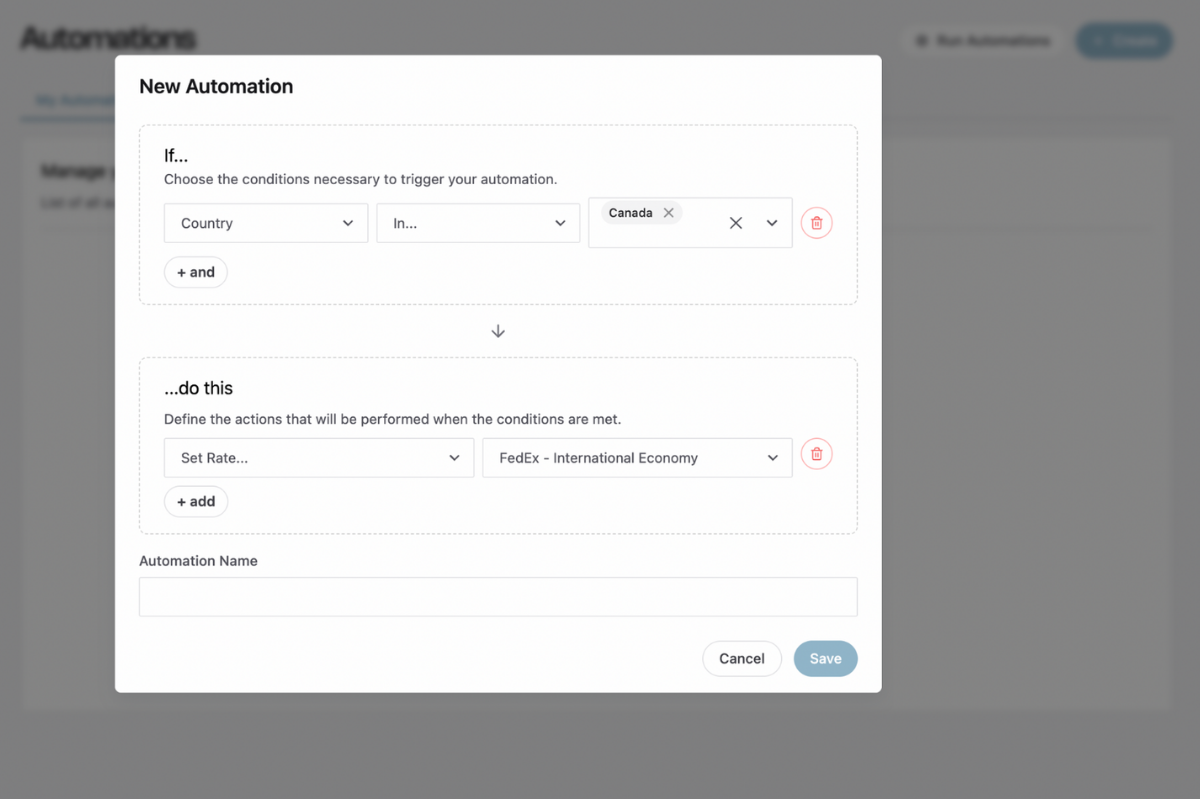
Basic tools rely on simple automation rules like:
- “If weight > X → use carrier Y”
But real operations require advanced automation:
- Route orders based on order data, SKU type, and destination
- Apply logic across warehouses using automated order routing
- Adjust for shipping costs, delivery speed, or free shipping thresholds
Shipping rules allow for automated decision-making based on predefined conditions, but the best platforms go further, combining multiple conditions into dynamic workflows.
This is how you:
- Reduce manual errors
- Cut costs
- Improve delivery performance
Automating the Entire Shipping Process (Not Just Labels)
Most tools focus on print labels.
The best shipping solution automates the full shipping process:
- Importing orders from ecommerce platforms
- Assigning carriers based on carrier rates
- Generating shipping labels and packing slips
- Creating automated customs documentation
- Sending tracking updates
Batch label generation allows teams to batch print labels and packing slips simultaneously, saving time and eliminating bottlenecks.
Automated shipping systems allow for significantly faster turnarounds by automating time-consuming tasks like packing and sorting stock levels.
Multi-Carrier Optimization and Cost Savings
One of the biggest advantages of shipping automation software is cost control.
The best tools:
- Compare carrier rates in real time
- Unlock discounted rates from carriers
- Optimize for delivery speed vs cost
Most shipping platforms negotiate discounted shipping rates for USPS and UPS that individual shippers can’t access.
This leads to:
- Lower shipping costs
- Better cost savings
- More efficient fulfillment
Using automation technologies can cut operational costs by up to 43% by streamlining logistics processes.
International Shipping Without the Complexity
International Shipping Automation That Works
International shipping adds complexity, but automation simplifies it.
The best platforms provide:
- Automated customs documentation
- Tax and duty calculations
- Multi-carrier international rate comparison
Automated shipping document generation speeds up cross-border shipments and avoids delays.
Platforms like Easyship dominate international logistics with hundreds of courier options, but without strong automation, teams still face manual work.
Shipping automation can generate customs documentation and calculate taxes automatically, removing friction from global expansion.
Real-Time Tracking and Customer Experience
Real-Time Tracking Pages That Improve Customer Experience
Shipping isn’t just operational, it’s part of the customer experience.
The best shipping software includes:
- Automated tracking emails
- Real-time tracking updates
Platforms like Corso focus heavily on post-purchase experiences, showing how critical this stage is.
Automated tracking emails keep customers informed with real-time updates, reducing support tickets and improving satisfaction.
Better branded tracking leads to:
- Increased trust
- Fewer “where is my order” requests
- Higher retention
Ecommerce Platform Integrations and One Unified Workflow
The best shipping automation software connects everything into one platform.
It should integrate with:
- Shopify and WooCommerce (shopify woocommerce)
- ERP systems
- Inventory and order management tools
All major shipping platforms integrate with Shopify, but not all create a unified workflow.
The right shipping app:
- Syncs order data automatically
- Keeps inventory records updated
- Connects multiple sales channels into a single dashboard
Shipping automation integrates multiple sales channels into a single dashboard for better inventory management, reducing reliance on multiple systems.
Reducing Human Error and Manual Work
How Shipping Automation Reduces Human Error
Manual processes create risk.
The best shipping software:
- Eliminates manual tasks
- Reduces human error
- Prevents costly mistakes
Automated address validation can reduce up to 40% of avoidable delivery errors.
Automation significantly reduces the need for human intervention, allowing teams to focus on higher-value work instead of repetitive execution.
This leads to:
- Fewer failed deliveries
- Lower operational costs
- Better efficiency
What the Best Shipping Software Looks Like Today
The market is crowded with shipping software options.
Many platforms position themselves as the best shipping software by offering:
- A free plan or free tier
- Lower or no monthly fees
- Access to discounted rates
- Basic label printing and shipping labels
Tools like Shippo, Sendcloud, and Pirate Ship make it easy to get started, especially for smaller teams trying to avoid monthly fees and reduce upfront costs.
But as your ecommerce business grows, the definition of the best ecommerce shipping automation software changes.
It’s no longer about:
- Printing labels
- Accessing carrier portals
- Or finding the lowest shipping rates
It becomes about how well your shipping platform can:
- Handle increasing order volume
- Adapt to operational complexity
- Automate workflows across multiple systems
- Reduce manual work and human error
This is where most tools fall short. They’re designed to be easy to start, but not built to scale.
Where VESYL Fits In
VESYL is built for teams that have moved beyond basic shipping tools and need a more advanced shipping solution.
Instead of relying on static automation rules, VESYL enables:
- Advanced automation across SKU, destination, and order data
- Real-time ability to compare carrier rates across multiple carriers
- Intelligent order processing and routing across warehouses
- Seamless integration with ecommerce platforms and ERP systems
- Full automation of the shipping process, from order import to tracking updates
It brings everything into one platform, eliminating the need to manage multiple systems or rely on manual overrides.
The result:
- Fewer manual tasks and repetitive tasks
- Reduced manual errors and costly mistakes
- Faster fulfillment and improved customer experience
- Better cost savings and lower shipping costs
Final Thought: Automation Should Eliminate Work, Not Create It
Shipping automation isn’t just about saving time.
It’s about building a system that:
- Reduces human error
- Cuts costs
- Improves supply chain efficiency
- Supports long-term growth
Most tools automate pieces of the process.
The best ecommerce shipping automation software automates the entire system, so your team can focus on growth, not operations.
Related Topics
Learn how VESYL can save you money on shipping
Not sure which plan suits you best? Have questions about our software? Contact our sales team for expert guidance.