TikTok Shop shipping is no longer just another channel workflow. In 2026, TikTok is enforcing new logistics requirements that push sellers into TikTok-managed shipping paths. If your shipping software or WMS is not built for this, you risk turning TikTok into a manual, separate process that is hard to scale.
TL;DR
TikTok Shop now requires sellers to ship through TikTok Shop Logistics Services. In practice, that means you must either:
- Use Fulfilled by TikTok, where you send inventory to TikTok and TikTok fulfills orders, or
- Use TikTok Shipping and other TikTok-approved logistics flows when you fulfill orders yourself.
TikTok Shop operates under two primary shipping models: TikTok Shipping (platform-managed) and Seller Shipping (independent fulfillment under TikTok’s rules).
Because both models require sellers to follow TikTok’s specific logistics workflows, your shipping software must be able to support those requirements. If it cannot, your team will need to log into TikTok Seller Center to generate labels and manage fulfillment manually.
At low volume, that may be manageable. But at scale, the added operational friction can slow TikTok growth, increase labor costs, or force a change in tech stack or fulfillment strategy.
What has changed in 2026
1. TikTok is phasing out independent seller-managed shipping
TikTok is moving away from the model where merchants can fulfill orders entirely through external platforms and simply upload tracking. The direction is clear: orders need to flow through TikTok’s logistics framework.
2. USPS labels must be created inside TikTok Shipping
Starting in January 2026, TikTok requires that USPS labels for TikTok Shop orders be purchased and printed through TikTok Shipping, not created in an external platform and synced back. Sellers can print shipping labels in bulk directly through the TikTok Shop Seller Center, where they can also select the appropriate shipping method for each order. If your operation relies heavily on USPS, this is one of the biggest compliance triggers.
3. Dispatch expectations are stricter
TikTok is also tightening dispatch standards, including reducing the tolerance for gaps between label creation and carrier acceptance scans. This pushes warehouses to align pick, pack, label, and handoff timing more tightly than many teams are used to.
Orders are expected to be picked up and scanned by carriers within 2 business days to avoid penalties on Late Dispatch Rate (LDR). Sellers must ensure that valid tracking is assigned to orders within the dispatch Service Level Agreement (SLA) for all shipping types.
The two compliant paths TikTok is pushing
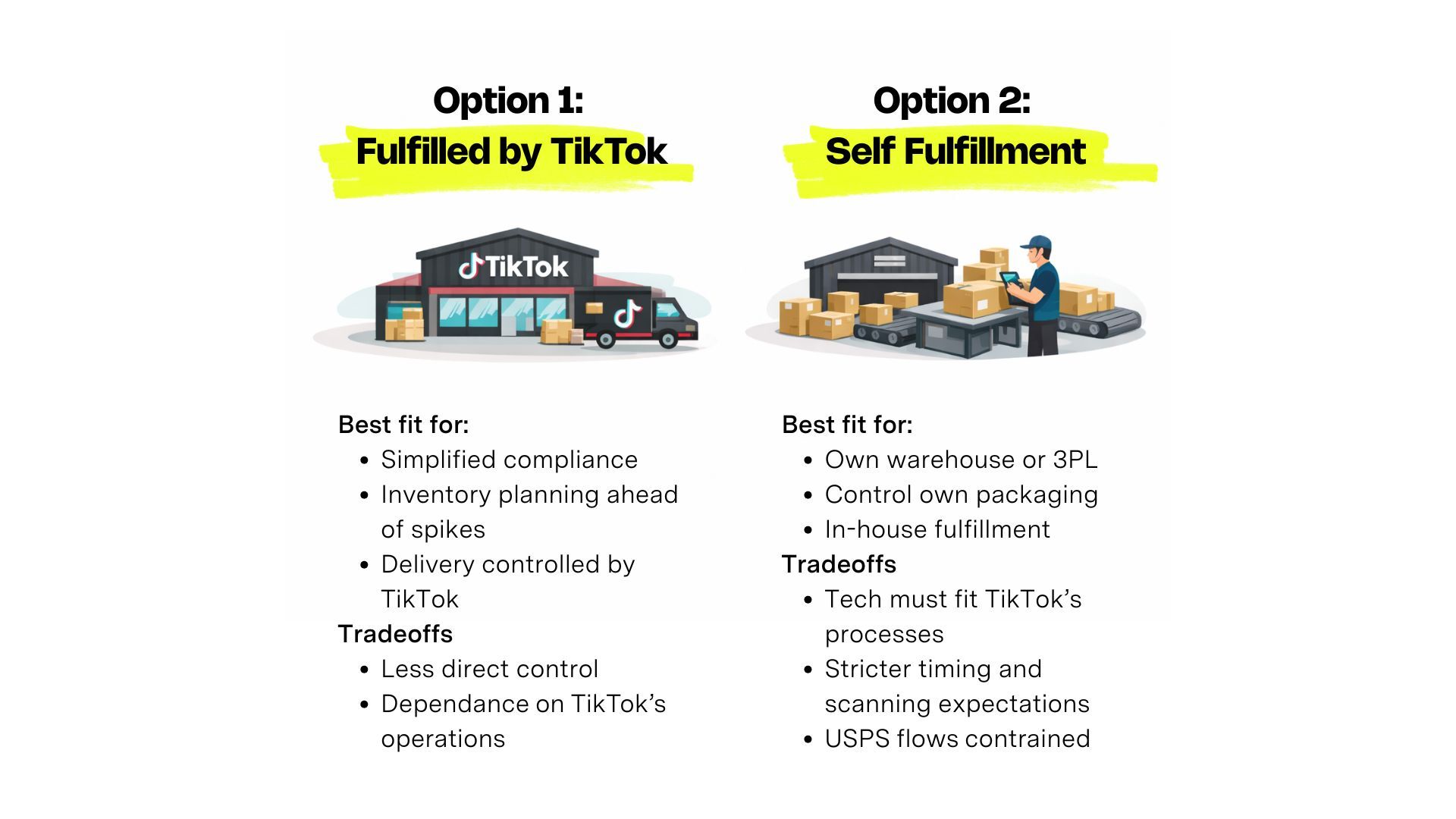
Option 1: Fulfilled by TikTok
With Fulfilled by TikTok, you send inventory into TikTok’s fulfillment network and TikTok handles storage, pick, pack, and shipping. This is TikTok’s most controlled model and is similar to the fulfillment approach by Amazon.
Best fit for:
- Brands that want a simpler compliance path
- Teams that can plan inventory placement ahead of demand spikes
- Sellers who want TikTok to own more of the delivery experience
Tradeoffs:
- Less direct control over warehouse execution
- Inventory placement and replenishment become critical
- You are more dependent on TikTok’s operational rules and fees
Option 2: Self-fulfillment under TikTok Shipping rules
If you fulfill orders yourself or through a 3PL, TikTok still expects shipping to follow TikTok-managed workflows, including TikTok Shipping and its compliance requirements. In the Seller Shipping method, sellers manage their own logistics, set up their own shipping templates, and negotiate carrier contracts directly.
Best fit for:
- Brands with established warehouse or 3PL operations
- Teams that need more control over packaging, inserts, and kitting
- Sellers who want to keep fulfillment within their existing network
Tradeoffs:
- Your shipping tech must support TikTok’s process
- Your warehouse must meet stricter timing and scanning expectations
- USPS flows are constrained by TikTok’s label rules
What this means for ecommerce brands
TikTok becomes a separate fulfillment system if you are not integrated
Many brands currently have to sign into TikTok to process orders because their shipping software or WMS does not support TikTok’s logistics workflow. That might be manageable at low volume, but if you do thousands of TikTok orders per month, it creates real constraints:
- Extra logins and manual steps
- A separate exception process
- Training and SOP drift across channels
- Increased risk of late dispatch, missing scans, and policy flags
Manual processes are not equal to integrated, automated solutions in terms of efficiency and reliability. The net effect is that TikTok can stop being a scalable acquisition channel, not because demand is missing, but because fulfillment cannot keep up.
Tool compatibility becomes a channel risk
If your platform cannot support TikTok’s compliance rules, you end up with two bad choices:
- Build a manual process inside TikTok and add labor
- Switch tools to an integrated workflow, which often requires you to set up new workflows or shipping templates to ensure accurate order processing and shipping rates.
This is why some brands talk about needing to leave older shipping stacks, such as ShipStation, when TikTok becomes a meaningful revenue channel.
Margin pressure shifts across 3PLs and software platforms
As TikTok controls more of the shipping workflow, many 3PLs and tech platforms can no longer monetize shipping in the same way through carrier programs. That can drive pricing changes elsewhere and increases the importance of operational efficiency, automation, and analytics instead of rate margin.
The operational goal: keep TikTok in the same shipping queue as everything else
The cleanest outcome for most brands is simple:
- TikTok orders appear in the same order list as Shopify, marketplaces, and other channels, making it easy to manage orders across multiple warehouses
- The warehouse runs one pick, pack, and ship process, efficiently processing shipments across all channels
- Exceptions are handled once, not per channel
- Compliance steps are baked into the workflow, not bolted on manually
How VESYL fits into your workflow
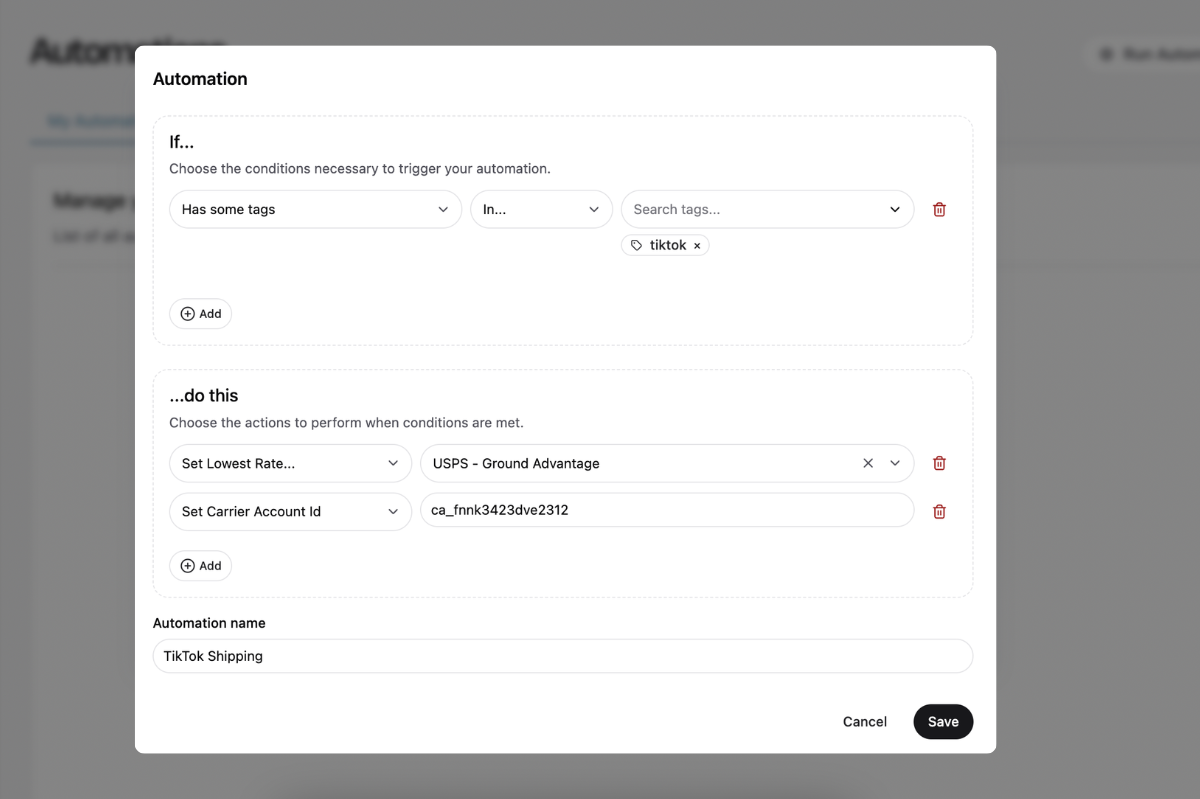
VESYL now integrates with TikTok Shop and supports TikTok’s updated carrier and compliance requirements. TikTok orders show up in your VESYL orders dashboard alongside your other channels so your team can process them in one workflow instead of living inside TikTok for shipping.
This is especially relevant for brands that:
- Do meaningful TikTok volume and need a scalable workflow
- Rely on USPS and need to comply with TikTok’s label requirement
- Want to avoid adding a separate TikTok-only SOP for fulfillment
- Are evaluating alternatives because their current tools do not support TikTok’s new logistics flow
Checklist: are you ready for TikTok shipping compliance in 2026?
- If you use USPS, can you generate USPS labels through TikTok Shipping as required?
- Can you ship TikTok orders without logging into TikTok for daily fulfillment tasks?
- Can your operation meet stricter dispatch and acceptance scan expectations consistently?
- Do TikTok orders flow into the same order dashboard as the rest of your channels?
- If not, do you have a plan: Fulfilled by TikTok or integrated self-fulfillment?
Struggling with TikTok Shop shipping requirements? Talk to our shipping experts.
Related Topics
Learn how VESYL can save you money on shipping
Not sure which plan suits you best? Have questions about our software? Contact our sales team for expert guidance.