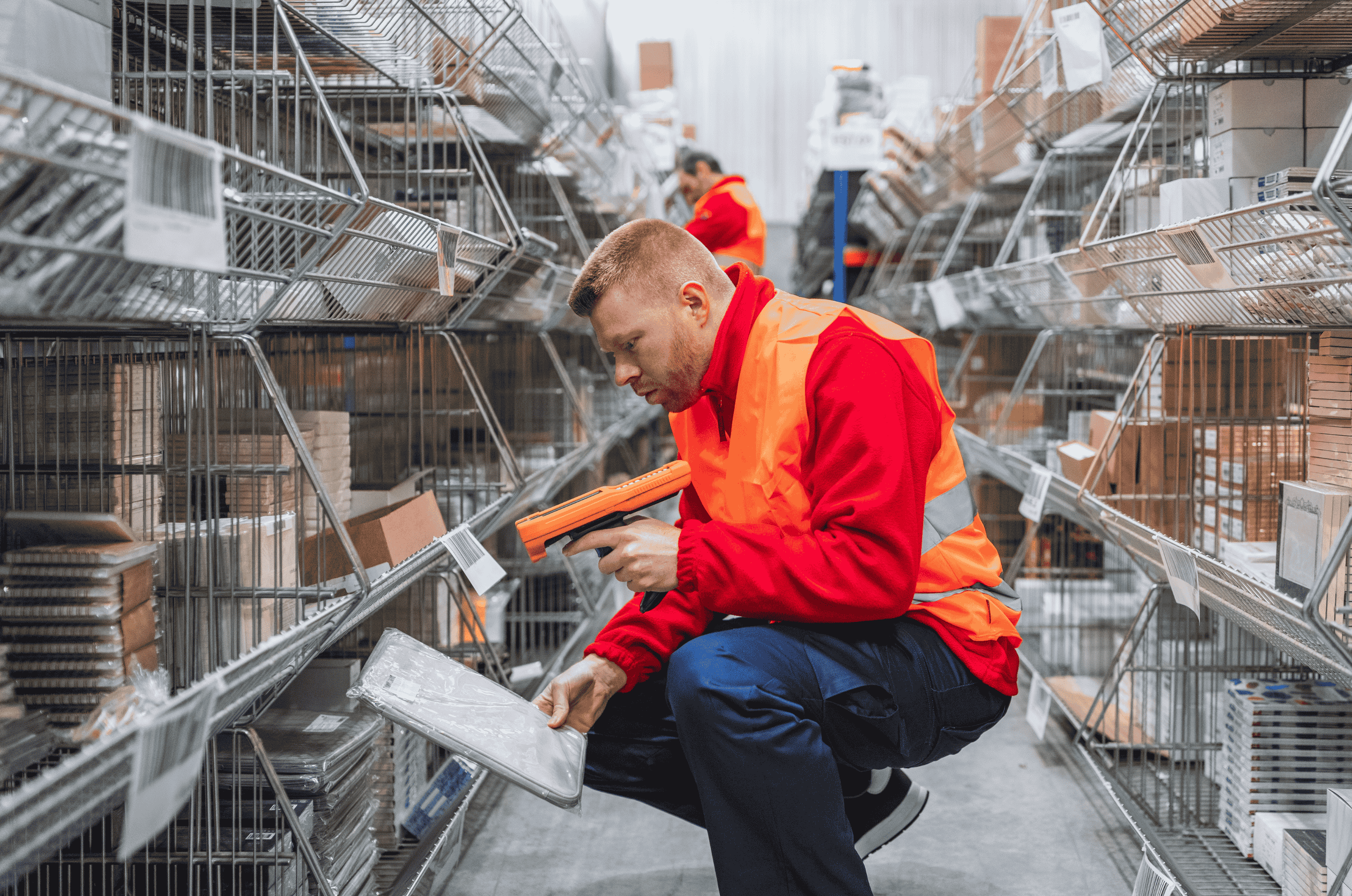
Artificial intelligence is no longer just a catchphrase. It is reshaping the mechanics of how ecommerce brands manage fulfillment networks, allocate inventory, and deliver on customer expectations. From predictive inventory planning to shipping automation, AI is enabling ecommerce operators to move from reactive problem-solving to proactive, data-driven strategies.
The rise of ecommerce logistics is transforming the entire supply chain, as AI optimizes warehouse management, order fulfillment, and last-mile delivery to boost operational efficiency and customer satisfaction.
In the context of fulfillment, the real question for decision-makers is not whether to adopt AI, but where it can create measurable ROI inside their workflows.
How AI Works in Ecommerce Fulfillment Operations
By leveraging AI algorithms and machine learning, logistics companies can analyze massive volumes of data to forecast demand, optimize inventory management, and streamline shipping processes. These tools enable teams to automate repetitive tasks, minimize human error, and make smarter decisions in real time.
As a result, companies can better predict future demand, proactively address supply chain challenges, and optimize delivery routes to reduce shipping costs and improve delivery times.
Why AI Matters in Fulfillment Today
Ecommerce fulfillment is inherently complex: multi-node inventory networks, volatile demand patterns, unpredictable carrier performance, and rising customer expectations. Traditional rule-based systems simply cannot keep pace with the variability.
Logistics AI applications introduce advanced algorithms and machine learning models that address these challenges with three core capabilities:
- Pattern Recognition – AI tools scan millions of data points to identify inefficiencies in warehouse workflows, carrier performance, and shipping invoices faster than any manual audit.
- Predictive Modeling – Machine learning forecasts order spikes, bottlenecks, or SKU shortages more accurately than static historical averages.
- Real-Time Optimization – Algorithms power split-second routing, packaging, and carrier decisions at scale, continuously adjusting as new data flows in.
Real-World AI Use Cases in Ecommerce Fulfillment
1. Demand Forecasting, Inventory Management, and Supply Chain
AI-powered demand forecasting uses artificial intelligence to analyze historical sales data, seasonal peaks, promotions, and external triggers (weather, regional events, marketing campaigns) to model order flow and accurately predict future customer demand.
- Impact: Brands can pre-position inventory in the right fulfillment centers, cutting down average shipping zones, transportation costs, and delivery times. AI-powered demand forecasting leverages historical data to optimize inventory placement, prevent stockouts or overstocking, and ensure products are available to meet customer demand efficiently.
- Example: A brand with 40% of orders shipping to California may reduce Zone 7–8 costs by repositioning high-velocity SKUs to a West Coast DC.
2. Dynamic Shipping Process Automation
Static carrier routing rules don’t reflect real-world variability. AI-driven shipping automation adapts dynamically:
- Selects carriers based on cost and SLA performance in specific lanes.
- Flags when switching from ground to air will protect a customer delivery promise.
- Balances shipment volume across carriers to hit discount tiers and reduce transportation costs.
Automated shipping systems streamline the entire process, from scanning and weighing to labeling and verifying shipments, increasing throughput and efficiency.
This replaces “set and forget” rules with intelligent workflows that adjust to market conditions daily.
3. Packaging Optimization with AI
AI evaluates SKU dimensions, historical order pairings, and carrier DIM data to recommend the most cost-efficient packaging.
- Impact: Reduces dimensional weight charges, eliminates wasted space, and lowers packaging material spend.
- Example: Instead of shipping a single small SKU in a default 12x12x12 box, AI recommends a padded mailer, cutting the billable weight in half.
4. Returns Prediction and Reverse Logistics Automation
Returns are costly and often unpredictable. AI models use product type, customer behavior, and order history to predict return likelihood.
- Automates RMA approvals for low-value items, reducing manual workload.
- Flags high-risk returns for inspection to cut down on fraud and unnecessary restocking costs.
- Helps logistics teams streamline reverse logistics, turning returns into a customer retention lever instead of a pure cost center.
5. SLA Compliance and Exception Management
AI continuously monitors shipments against promised timelines.
- Detects delays in real time and reroutes packages proactively to protect SLAs.
- Produces adherence reports by carrier and lane to strengthen contract negotiations.
- Identifies chronic service gaps where alternative carriers or delivery models may be needed.
Fulfillment Process
The fulfillment process is a cornerstone of successful logistics operations, encompassing the receipt, processing, and shipping of customer orders. Artificial intelligence enhances every stage of the fulfillment process by optimizing inventory management, forecasting demand, and streamlining shipping processes.
Automation of order processing, packaging, and shipping reduces human error and increases efficiency, allowing logistics teams to handle higher order volumes with greater accuracy. By optimizing the fulfillment process, companies can improve customer satisfaction, lower operational costs, and build a more resilient supply chain that adapts to changing market conditions.
Delivery Process
The delivery process represents the final and often most critical stage of logistics operations, where goods are transported from the warehouse to the customer’s doorstep. Artificial intelligence plays a pivotal role in optimizing this process by analyzing data such as traffic patterns, road conditions, and weather forecasts to determine the most efficient delivery routes.
These tools automate route optimization, scheduling, and real-time tracking, enabling logistics companies to provide customers with accurate delivery updates and enhance overall satisfaction. By optimizing delivery routes, companies can reduce fuel consumption, lower emissions, and improve safety, all while ensuring timely deliveries.
Embracing AI powered delivery solutions not only helps logistics companies reduce costs and improve customer satisfaction but also supports the development of more sustainable and efficient operations.
Customer Experience in the Age of AI
AI is not just about cutting costs; it directly impacts customer loyalty. By analyzing customer behavior and order history, AI-powered tools tailor shipping promises to be both achievable and transparent.
- Checkout displays can dynamically adjust delivery timelines based on inventory location and carrier reliability.
- Predictive analytics ensure high-demand products are in stock where they’re needed most, preventing out-of-stocks and long lead times.
- Personalization engines can factor in shipping preferences (speed vs. cost) and offer optimized delivery options.
The result: fewer missed deliveries, fewer WISMO tickets, and higher repeat purchase rates. These AI-powered solutions enhance customer satisfaction by providing timely and accurate support for basic customer inquiries.
The ROI of Logistics AI Applications
Adopting AI in fulfillment should be measured in numbers:
- Cost Savings: Lower DIM fees, smarter carrier routing, fewer SLA penalties, and reduced fuel spend from optimized routes. AI-driven automation and optimization also lead to reduced operational costs across fulfillment and logistics operations.
- Efficiency Gains: Faster pick-pack-ship workflows, less reliance on manual exception handling, and reduced labor hours per order.
- Customer Impact: Improved delivery accuracy, fewer missed promises, and higher satisfaction scores.
Case studies show that brands integrating AI into ecommerce shipping automation can cut cost-per-order by 10-20% in the first year alone.
Implementation and Integration of AI Solutions
Rolling out AI requires a clear roadmap:
- Identify Pain Points – Is inventory accuracy the main challenge, or is it carrier underperformance?
- Prioritize High-Impact Use Cases – Packaging optimization, SLA monitoring, or demand forecasting are often the best starting points.
- Integrate with Existing Systems – AI needs structured, clean data from WMS, OMS, and carrier APIs to deliver reliable outputs.
- Train Teams – Adoption succeeds only when operators understand and trust AI-driven recommendations.
Successful AI integration also requires a clear understanding of the logistics process and how it fits within overall supply chain management, ensuring that each stage (from warehouse automation to last-mile delivery) benefits from AI-driven optimization.
Measurement and Continuous Evaluation
AI is not a “set and forget” investment. Operators must track KPIs such as order cycle time, SLA adherence, and cost-per-order to evaluate AI’s impact. Predictive analytics should be reviewed regularly to refine accuracy as conditions evolve.
Continuous measurement ensures that AI remains a tool for competitive advantage rather than a one-time initiative.
Challenges to Adoption
The opportunities are clear, but adoption hurdles remain:
- Data Quality: Poor data hygiene leads to inaccurate models and bad recommendations.
- Integration Barriers: Legacy WMS and OMS systems may resist AI overlay.
- Change Management: Teams need structured rollout plans to trust AI insights.
Phased adoption, starting with high-impact, low-complexity use cases like carrier routing or packaging optimization, is the most effective path.
Future of AI in Ecommerce Fulfillment
Looking ahead, AI will continue moving deeper into logistics decision-making:
- Predictive algorithms will forecast international lane delays and automatically adjust fulfillment plans.
- Route optimization will factor in sustainability goals, balancing carbon footprint with cost and delivery speed.
- AI-driven negotiation models will strengthen procurement teams in carrier contract discussions.
Final Takeaway
By deploying logistics AI applications in demand forecasting, shipping automation, packaging, returns, and SLA monitoring, operators can protect margins while delivering consistent customer experiences.
The competitive advantage lies in moving from static, rule-based logistics to dynamic, AI-driven workflows. The brands that make that shift will not only reduce costs but also gain the trust of customers in a market where every delivery promise matters.
Related Topics
Learn how VESYL can save you money on shipping
Not sure which plan suits you best? Have questions about our software? Contact our sales team for expert guidance.
.png)
%20(1).png)
.png)