
Most ecommerce businesses know that manual shipping processes slow things down. What they underestimate is how much those processes are actually costing them, not just in time, but in errors, labour, margin, and customer trust.
Fulfillment inefficiencies rarely show up as a single identifiable line item. They accumulate quietly across every order, every shift, and every carrier decision made by hand. By the time the cost is visible, it has already been compounding for months.
This article breaks down what the manual shipping process in ecommerce is really costing your business, where the losses hide, and what shipping workflow automation actually fixes.
What Is the Ecommerce Shipping Process and Where Does Manual Work Create Risk?
The ecommerce shipping process typically consists of six key stages: order receiving, order processing, fulfillment, shipping, delivery, and returns management. Each stage involves decisions, data entry, and handoffs that, when handled manually, introduce variability and risk.
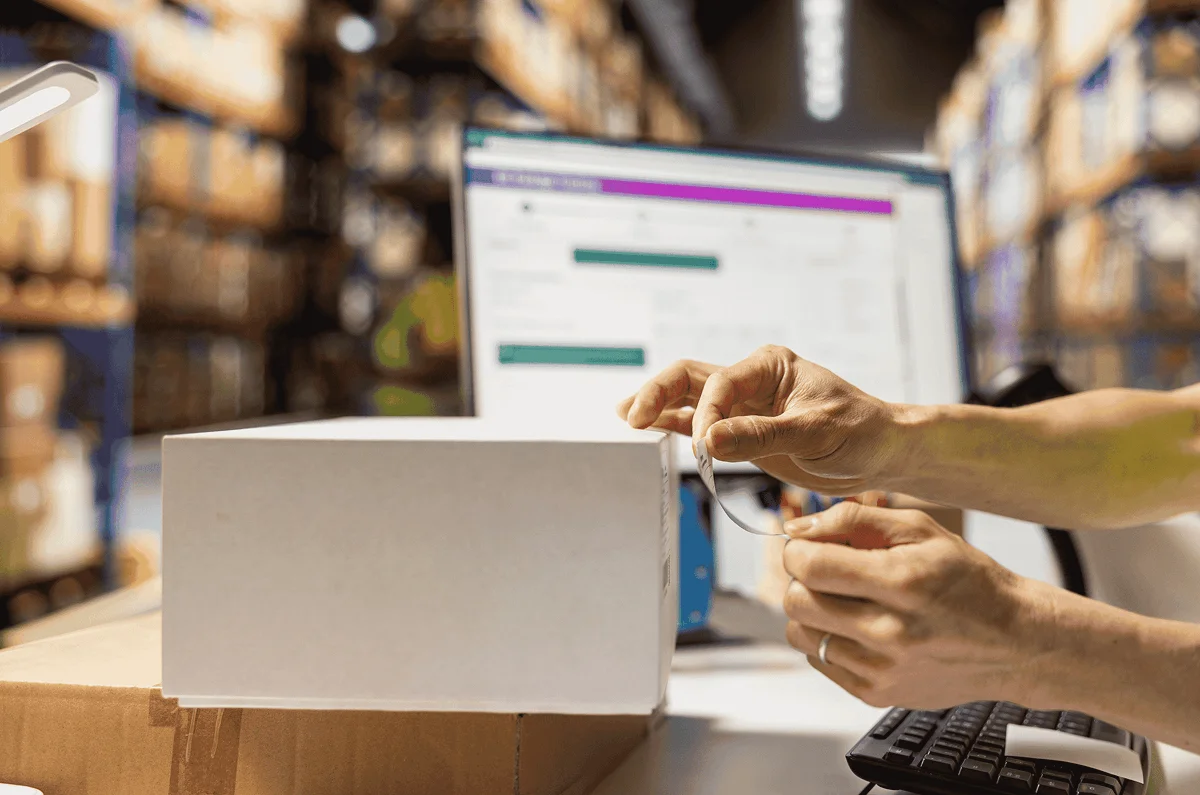
Manual shipping refers to handling those decisions and inputs by hand, without automation. In practice, that means staff physically retrieving items from inventory, inspecting products, selecting packaging, measuring dimensions, entering shipping addresses, generating labels individually, and selecting a carrier based on habit or default settings rather than real-time data.
For very low-volume or highly customised operations, manual processes are manageable. For ecommerce businesses operating at any meaningful scale, they become a cost problem fast.
Why Manual Shipping Processes Do Not Scale for Ecommerce Businesses
Manual shipping workflows feel manageable at low volume. One person, one screen, one carrier. The process works well enough and errors get caught quickly.
The problem is that manual processes do not scale. As order volume grows, the cost of every manual decision multiplies. A shipping error that costs $12 to resolve at one hundred orders a day costs significantly more at several thousand. A routing decision that takes thirty seconds per order adds up to dozens of hours of wasted labour each month at high volume.
Manual shipping also introduces variability that is hard to manage. Different staff members make different decisions. Rules that exist in someone's head do not get applied consistently. And when something goes wrong, tracing the error back to its source is slow and unreliable.
Shipping costs represent one of the highest variable costs in ecommerce operations. A manual shipping process guarantees you are not managing those costs as tightly as you could be.
The Real Cost of Fulfillment Inefficiencies Across Your Ecommerce Platform
Fulfillment inefficiencies show up across four cost categories that are easy to underestimate individually but significant in combination.
The first is labour costs. Manual shipping processes are labour-intensive by definition. Every decision that requires a human to look something up, compare options, or enter data manually is a labour cost attached to that shipment. As order volume grows, labour costs grow with it, often faster than revenue does.
The second is errors. Manual data entry into carrier portals for label generation involves typing customer and package details, which is time-consuming and error-prone. Wrong addresses, incorrect weights, mislabelled packages, and missed service level requirements all generate downstream costs: reshipments, carrier address correction fees, customer refunds, and the operational overhead of resolving each issue.
The third is carrier cost. Manual carrier selection means decisions get made on habit and convenience rather than shipping data. The most appropriate shipping carrier for a given shipment rarely gets chosen consistently because nobody has time to check every rate on every order. That gap between what you paid and what you could have paid accumulates invisibly across every label generated by hand.
The fourth is customer experience. Slow fulfillment, missed delivery speeds, and shipment errors erode customer trust in ways that are hard to measure but easy to feel. Lost customers, refund requests, and missed free shipping promotions that could not be executed reliably all trace back to fulfillment processes that manual workflows struggle to deliver consistently at scale.
Order Processing Errors: Where the Losses Start in a Manual Shipping Workflow
The Carrier Selection Problem
In a manual shipping process, carrier selection is typically made by whoever is at the pack station. They choose the carrier they know, the service level that feels right, or whatever the ecommerce platform defaults to. Rate shopping across multiple carriers happens rarely if at all, and when it does, it is slow.
The result is a carrier mix driven by convenience rather than cost or performance data. Many ecommerce businesses now use multi-carrier shipping software to compare rates and select the best option for each shipment. Without it, you are consistently overpaying on a share of orders that could have gone cheaper without any impact on delivery speed.
Manual Data Entry and Its Downstream Costs
Address entry, weight input, dimension recording, and shipping method selection are all error-prone when handled manually. Each error creates a downstream cost: carrier address correction fees typically run $15 to $20 per package, reshipment costs double the carrier spend on affected orders, and the labour cost of resolving each issue adds further overhead.
A manual shipping process running at a one to two percent error rate across ten thousand monthly shipments generates one hundred to two hundred errors per month. At an average resolution cost of $20 to $30 per error, that is $2,000 to $6,000 in recoverable cost every month, before accounting for the customer experience impact.
The Label Generation Bottleneck
In a manual workflow, label generation is a sequential process. Each order gets processed one at a time, which creates a throughput ceiling that limits how fast your operation can ship regardless of how many staff you add.
This bottleneck has a direct impact on shipping costs. Orders that cannot be processed fast enough miss ground shipping cutoffs and get bumped to expedited service levels. A shipment that should have cost $8 via standard shipping ends up costing $22 via two-day air, not because the customer needed it faster, but because the manual process could not keep up with order volume.
Inconsistent Rule Application Across Fulfillment Processes
Manual shipping workflows depend on institutional knowledge. Rules about which carrier to use for certain zones, which shipping method applies to certain product types, and which packages require special handling exist in people's heads rather than the system.
When those people are absent, busy, or new, the rules do not get applied consistently. Inconsistent rule application means inconsistent costs, inconsistent delivery speed, and a fulfillment center that becomes harder to manage as it grows.
Inventory Management and Real Time Visibility: What Manual Processes Miss
Ecommerce businesses using manual shipping often need to verify inventory and customer details manually to prevent fraud or shipping errors. Without real time inventory visibility, that verification is slow and unreliable.
Real time inventory tracking across all storage locations and sales channels is what separates profitable operations from chaotic ones. When your physical inventory count and your order management system are not in sync, you get overselling, incorrect picks, and fulfillment delays that flow directly into your shipping data and your customer experience.
A warehouse management system provides real time inventory visibility and improves order fulfillment accuracy in ways that manual processes cannot. Without one, your picking process is only as accurate as the last time someone walked the floor and counted. That is not a system. It is a liability.
Omnichannel complexity makes this worse. Ecommerce businesses selling across multiple platforms face fulfillment challenges that manual inventory management is not equipped to handle at pace. Orders from different channels compete for the same physical inventory, and without automated real time tracking, errors multiply fast.
Order Fulfillment and Delivery Speed: What Customers Actually Expect
A well-structured shipping process is the engine behind every positive review, repeat order, and customer referral. Customers expect to know where their order is at every step. Real time order tracking and automated shipping notifications improve transparency and reduce customer inquiries about order status.
Shipping costs and delivery speed are two of the most common reasons shoppers abandon their carts. Manual shipping processes make it harder to deliver on both. Slower label generation delays dispatch. Inconsistent carrier selection means delivery windows are harder to predict and communicate accurately.
Creating a process that allows you to offer customers different shipping methods, including same day delivery, standard shipping, and free shipping thresholds, increases average order value and builds brand loyalty. Manual processes make offering and fulfilling multiple shipping options reliably very difficult at scale.
Customer expectations around free shipping are not going away. Offering free shipping can incentivise larger purchases and reduce cart abandonment. But free shipping promotions only work if your underlying shipping process is efficient enough to absorb the cost. Manual processes inflate that cost, making it harder to offer free shipping competitively.
Automated Shipping: What Shipping Workflow Automation Actually Fixes
Shipping workflow automation addresses fulfillment inefficiencies by removing the manual decision points that create variability and cost across the entire ecommerce shipping process.
Automated carrier selection evaluates every shipment against real-time rates across multiple carriers and service levels, then selects the option that meets the delivery promise at the lowest cost. It does this consistently on every order, without anyone needing to check.
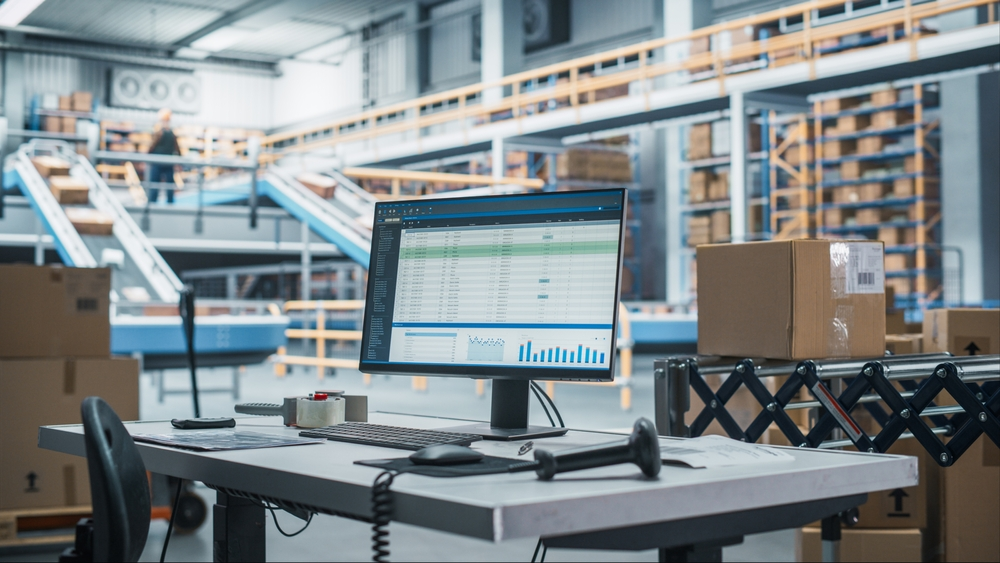
Automated address validation catches errors before a label is generated, eliminating the downstream cost of address correction fees and reshipments. Automated weight and dimension capture, when integrated with pack station hardware, removes human input from those data points entirely.
Batch picking and batch label generation remove the sequential throughput ceiling of manual processing. Orders can be processed in bulk, dramatically increasing the volume your operation can handle without adding headcount, and giving your team more time to meet ground shipping cutoffs rather than defaulting to expedited options.
Automated shipping rules replace institutional knowledge with system logic. Every rule that currently lives in someone's head gets encoded into the platform and applied consistently on every order regardless of who is working the pack station.
Real time order tracking, automated shipping updates, and branded tracking pages improve transparency and reduce customer inquiries about order status without any manual effort from your team.
Labor Costs and the ROI of Fixing Your Fulfillment Strategies
The return on shipping workflow automation is measurable across each of the cost categories that manual processes inflate.
Labour costs decrease because fewer manual decisions are required per shipment. The same team can handle significantly more order volume without a proportional increase in headcount.
Error rates decrease because automated data capture and validation remove the most common sources of manual input mistakes. Fewer errors mean fewer reshipments, fewer carrier fees, and fewer customer service interactions.
Carrier rates improve because automated rate shopping selects the most cost-effective option on every shipment rather than defaulting to habit. For most ecommerce businesses making the switch, this alone delivers meaningful per-shipment savings across total shipping volume.
Fulfillment speed increases because batch processing and automated workflows remove the throughput ceiling of sequential manual processing. Faster fulfillment means more ground shipping options, which compounds the carrier cost savings further.
When you integrate shipping software with your order management system and ecommerce platform, the efficiency gains extend across the entire process, from order data flowing automatically into label generation to tracking information being pushed to customers without manual input.
How to Identify Where Manual Processes Are Costing You the Most
Not every ecommerce business has the same fulfillment inefficiencies. The right starting point is identifying where your manual shipping process is generating the highest cost relative to the effort required to fix it.
Start by pulling your error rate data. How many shipments per month result in address corrections, reshipments, or carrier claims? Multiply that by your average resolution cost. If the number is significant, automated address validation and data capture should be your first priority.
Next, audit your service level split. What percentage of your shipments are going expedited when the order date and destination would have allowed standard shipping? If that percentage is high, your manual label generation process is likely missing ground cutoffs regularly.
Finally, review your carrier selection consistency. Are the same shipment types always going to the appropriate shipping carrier and service level? Or does the mix vary depending on who is working? If it varies, your routing decisions are not being made on data.
Regularly reviewing shipping data to identify areas for improvement in fulfillment processes is not a one-time exercise. It should be a monthly operational discipline.
What to Look for in Ecommerce Shipping Software
Not all shipping software addresses fulfillment inefficiencies in the same way. For ecommerce businesses operating at meaningful volume, the things that matter most are real-time rate shopping across multiple carriers, automated rule-based routing, batch label generation, address validation, and clean integration with your existing order management system, warehouse management system, and carrier accounts.
The integration point matters more than most brands appreciate before they go through the process. Shipping workflow automation that does not connect cleanly to your ecommerce platform and fulfillment center adds its own layer of manual work to compensate for the gaps. The efficiency gains get partially offset by the workarounds.
A well-structured shipping process built on the right shipping solution eliminates manual decision points. It does not just speed them up. That is the standard VESYL is built to — rate shopping, automated routing, batch processing, and real carrier integrations in one platform, so your team stops managing the process and starts trusting it.
Related Topics
Learn how VESYL can save you money on shipping
Not sure which plan suits you best? Have questions about our software? Contact our sales team for expert guidance.

%20(1).webp)
.webp)