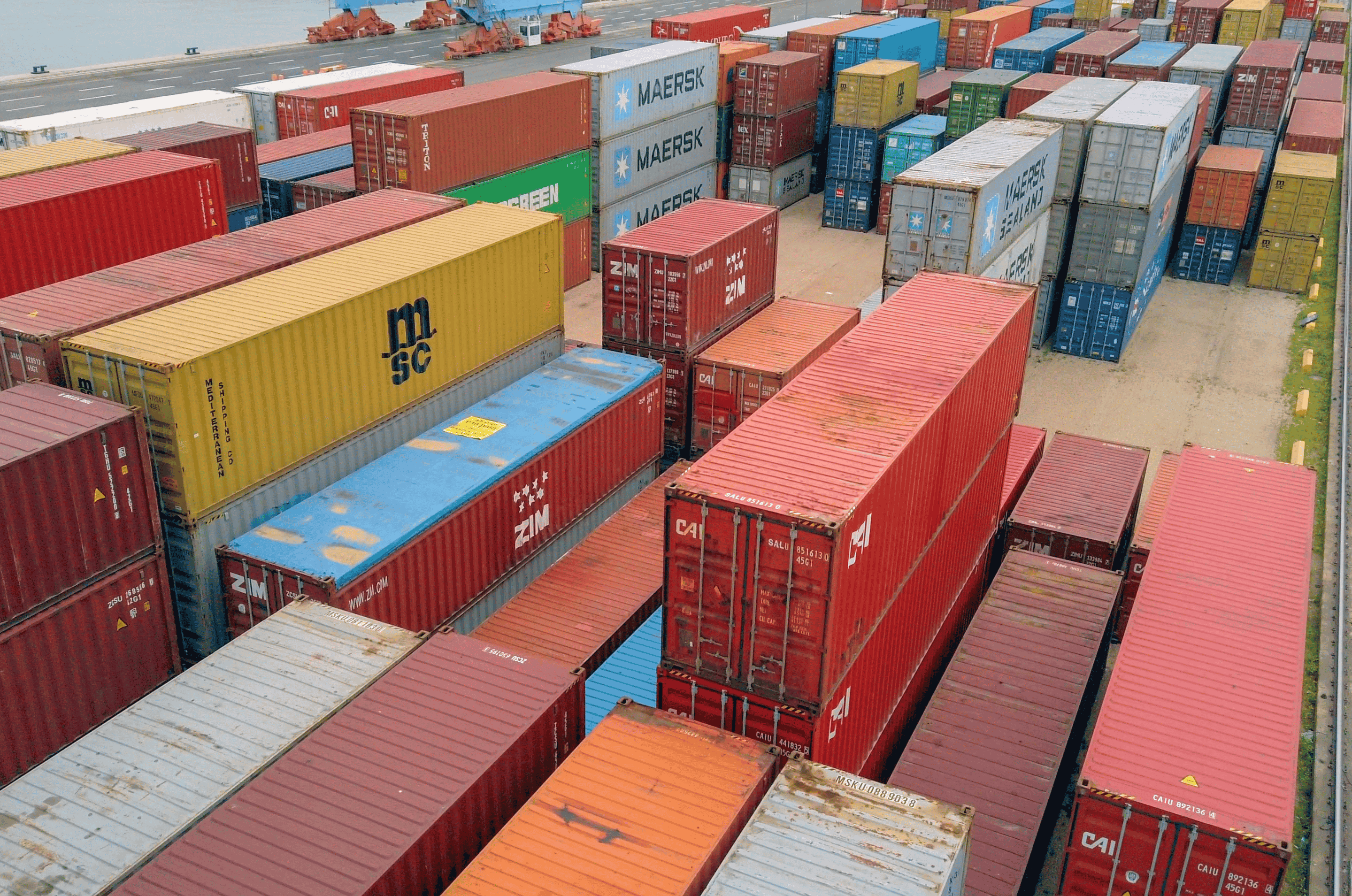

The first 2027 parcel rate increase is out, and it lands in the same week that ocean capacity stays tight and tariff relief stays on paper.
This week's news points to the same planning problem from several directions. Costs are moving on ocean freight, parcel, and duties at the same time, and the headline number rarely matches what a specific shipment will pay. The operators who model their own mix, instead of reacting to averages, will enter Q4 and 2027 with fewer surprises.
The Top 5 Shipping Stories This Week
1. Transpacific Ocean Rates Stay Elevated Heading Into October
Capacity on transpacific lanes remains tight ahead of Golden Week. Drewry's September 24 assessment put Shanghai to New York at $10,373 per 40-foot container, flat week over week, and Shanghai to Los Angeles at $7,838, up 2%. Carriers announced 15 blank sailings for the following week, up from nine.
What It Means for Shippers
Golden Week does not automatically reset rates. Delayed cargo combined with blank sailings can make post-holiday space the scarcer product, and Panama Canal restrictions continue to limit East Coast all-water options, with a further draft reduction scheduled for October 1.
- Confirm October allocations, equipment, and cut-offs now, and ask carriers directly about blanked voyages and rollover protection
- Price a West Coast plus inland routing alongside all-water East Coast, including drayage, rail time, and the safety stock each option requires
- Treat benchmark rates as direction, not pricing, since spot assessments are not all-in or contract rates
- Plan holiday replenishment around reliability rather than the lowest quote, because a rolled container costs more than the rate difference
Watch weekly benchmark indexes and blank sailing notices through mid-October before committing to peak replenishment timing.
2. U.S. and China Release "30-for-30" Lists That Set Up Future Tariff Relief
Following the Trump and Xi meeting, the U.S. and China released reciprocal lists covering roughly $30 billion of non-sensitive goods in each direction. The U.S. import list identifies 77 HTSUS lines, including plastic tableware and kitchenware, Christmas ornaments, fireworks, and inflatable balls. The framework states that actual duty reductions will be set through each country's domestic legal process.
What It Means for Shippers
This is not an entry-ready duty cut. Any savings will apply only at the exact tariff line, sometimes narrowed further by specific product descriptions, and only once the reductions take legal effect.
- Have your customs broker map affected SKUs to the exact HTSUS provision and keep origin and product specification records on file
- Model landed cost under both current duties and the potential reduced rate, but do not change purchase orders, pricing, or accruals yet
- Watch USTR and CBP notices for the actual rate, effective date, and how the reduction interacts with other duties already in place
Brands in affected categories now have a clear reason to organize classification data that should have been clean anyway. The $30 billion headline is not the worklist. Your SKU list is.
3. FedEx Announces 5.9% Average Rate Increase for 2027
FedEx will raise U.S. package rates by an average of 5.9% on January 4, 2027, with minimum charges and multiple surcharges also increasing. The residential delivery surcharge rises from $6.95 to $7.35, and oversize charges in Zones 3 and 4 go from $275 to $290. Starting January 18, FedEx will add a $25 fee for paper trade documents and a $5 fee for shipments initiated with manual paper airbills.
What It Means for Shippers
The 5.9% figure is an average, and most ecommerce mixes will not land on it. Supply Chain Dive reports that FedEx Ground parcels between one and five pounds, the core ecommerce weight range, will see a 6.49% increase before surcharges are applied.
- Reprice your actual 2026 FedEx volume by service, zone, weight, dimensions, and residential share instead of applying a blanket 5.9%
- Test slower services for transit-tolerant orders, since increases on some deferred services came in below faster options
- Move any remaining paper trade documents and airbills to electronic workflows before January 18, when those fees start adding up per shipment
- Hold final 2027 budget decisions until UPS and regional carriers publish their rate changes so you can compare real lane costs
Your rate and your actual cost are two different numbers, and this is the season when that gap gets set for the year ahead.
4. Amazon Brings Prime Delivery to Merchants' Own Websites
Amazon launched MCF Prime delivery for U.S. Multi-Channel Fulfillment merchants, letting eligible brands display Prime delivery on their own ecommerce sites while Amazon fulfills the order. The merchant keeps checkout, payments, customer data, returns policy, and customer service. Amazon says there is no added enablement fee beyond standard MCF fees, with a six-month introductory offer of 15 to 25% fulfillment fee savings for enrolled FBA sellers.
What It Means for Shippers
This separates Amazon's delivery promise from Amazon's marketplace, which makes it a direct benchmark against an existing 3PL and parcel carrier setup. The introductory pricing makes the first six months look favorable, so the real comparison is what the program costs after that window closes.
- Compare full cost including storage, the 3.5% fuel and logistics surcharge, peak fees, and returns handling against your current fulfillment and carrier contracts
- Consider what moving inventory into a single provider's network does to your carrier flexibility and negotiating position
- If you test it, run a narrow pilot on specific SKUs and ZIP codes and verify eligibility rules before promoting Prime on site
The decision is less about the badge and more about who controls your fulfillment economics once the introductory pricing ends.
5. Echo Combines Roadtex and ITS Logistics Into One Supply Chain Offering
Echo Global Logistics announced a unified North American supply chain suite combining Roadtex and ITS Logistics. The offer covers omnichannel fulfillment, warehousing, integrated parcel, retail consolidation, and temperature-controlled logistics across a footprint Echo describes as 8 million square feet in more than 40 facilities. The physical network was already public, so this is a commercial integration rather than new capacity.
What It Means for Shippers
Consolidating providers can remove handoffs between fulfillment, retail consolidation, and temperature-controlled transport, which is where many costly errors happen. Whether it works depends on lane coverage, systems integration, and actual performance, none of which a press release proves.
- Request facility-level certifications, real next-day coverage by ZIP code, and peak and exception SLAs before treating reach claims as commitments
- Ask who owns systems, EDI, and inventory data during and after any migration, since that determines how much control you keep
- Get parcel and retail consolidation rate cards alongside warehousing costs so the consolidation savings can be measured, not assumed
Treat this as a diligence exercise and watch for independently reported operating results before moving volume.
The Bottom Line
Every major story this week came with a number that looked simple and was not. Ocean benchmarks are not contract rates, tariff lists are not duty cuts, a 5.9% average is not your increase, and introductory fulfillment pricing is not your long-term cost. The gap between the headline and your actual shipment is where margin gets won or lost. Smart operators will spend October modeling their own lanes, SKUs, and package profiles so their 2027 decisions are based on real cost, not announcements.
Related Topics
Learn how VESYL can save you money on shipping
Not sure which plan suits you best? Have questions about our software? Contact our sales team for expert guidance.



%20(2).png)