.png)

A two-person fulfillment team can't work the way a fifty-person warehouse does, and trying to usually backfires. Enterprise processes carry steps that only make sense when there are people to fill them.
For a small team, the real bottleneck is rarely the label printer. It's the walking, searching, and second-guessing that happens before a box is ever packed.
This guide covers batch shipping for small teams, starting where most of the time actually goes: the pick floor. Along the way, it flags where lean teams tend to lose hours without realizing it.
Why Batch Shipping for Small Teams Works Differently
A lean fulfillment team workflow can't be a scaled-down copy of a distribution center's process. It has to fit the volume, headcount, and layout you actually have.
Small scale cuts both ways. When there's no one to cover a dropped task, every interruption stalls the whole operation. But a small team can also change how it picks or batches overnight, while a larger operation needs months.
That flexibility is the advantage worth building on.
What Batching Means on the Floor
Batching means grouping similar orders and working them as one unit. Instead of taking each order from pick to label, the team finishes one task for the whole group first.
The payoff is fewer task switches, and at small scale that's where time disappears. When one person picks, packs, and prints, each switch costs a few minutes that compound across the day.
A batch doesn't have to be complicated. It can be ten orders for the same SKU, or a full day's orders sorted by carrier before packing starts. How well any batch runs, though, depends on what happens before packing, on the pick floor.
Pick Optimization for Small Warehouses
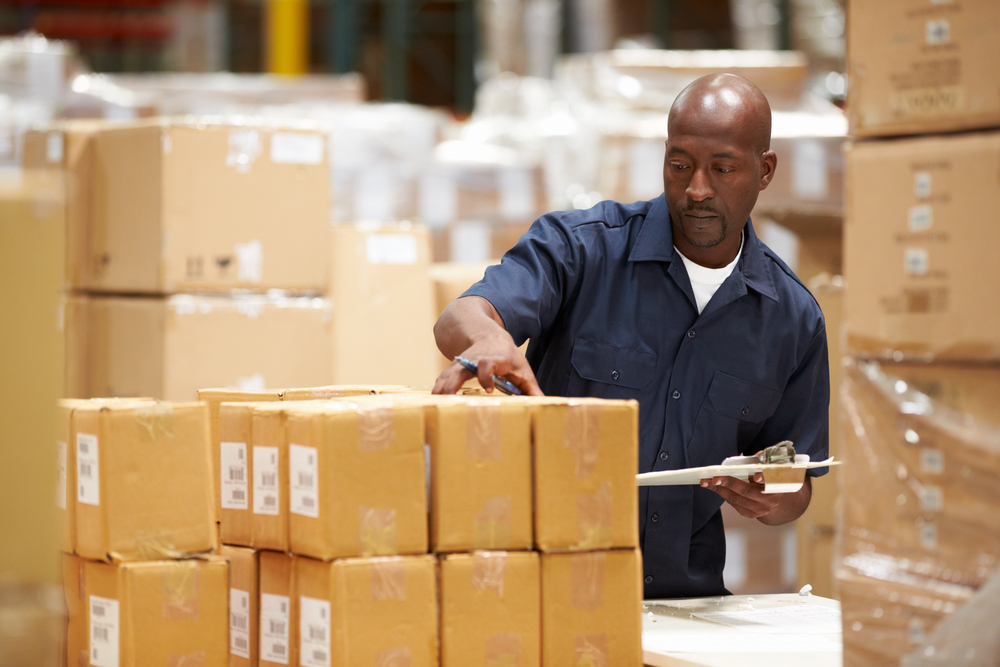
Picking is where most small teams lose the most time, and it's also where the fixes are cheapest. Pick optimization in a small warehouse rarely needs new equipment. It needs a better method, a better path, and better information on the ticket.
Choose the Right Picking Method
Order picking is the default for most small teams: one person, one order, one trip. It's simple, but it means walking the same aisles over and over.
Batch picking fixes the walking by pulling items for several orders in one trip. The tradeoff is a sorting step back at the pack station.
Pick-and-sort splits the difference. The picker pushes a cart with a tote for each order and sorts while walking, so nothing needs sorting later. For most two to three person teams, it's the best fit.
Set a One-Direction Pick Path
Whatever method you use, the path matters as much as the picking. A good path runs one way through the warehouse and ends at the pack station, without doubling back. The easiest way to get there is to sort each pick list in shelf order. That one change often saves more walking than new equipment would.
Put Bin Locations on the Pick Ticket
Even with a good path, a picker still has to know where each item lives. Without locations on the ticket, that knowledge lives in someone's head. It works fine for the person who stocked the shelves, then falls apart when seasonal help picks a batch.
Printing bin locations directly on the pick ticket takes the guesswork out. Dirt Bike Kidz, a small DTC team shipping 100 to 200 orders a week, saw this firsthand. After adding bin locations to their pick tickets, backtracking dropped and pick times fell. Combined with a few other workflow changes, the team cut fulfillment time per batch by about 50 percent. A batch that once took up to three people now takes one with VESYL.
Slot Inventory by How Often It Moves
Bin locations tell a picker where things are, but slotting decides whether that's a good place for them. When a fast-selling SKU sits at the back of the warehouse, every batch pays for the extra walk.
ABC analysis is the simplest way to sort this out. Rank SKUs by how often they move, with A items as your fastest and C items as your slowest. Then keep A items near the pack station and along the main path, and let C items sit further back.
Standardize the Packing Station
The pick path ends at the pack station, so the gains stop there if the station is a mess. A packer who knows where tape, boxes, and labels live moves far faster than one hunting for supplies. Keeping the station identical from shift to shift means anyone can step in without slowing the batch down.
Setting Up Batches That Actually Save Time
With the floor set up, the next question is how to build the batches themselves.
Batch by Similarity, Not Just by Date
A batch only saves time when the orders in it are genuinely similar. Same SKUs, similar package sizes, or the same carrier are all useful ways to group them. Batching by order date alone looks organized, but it doesn't reduce task switching. It just moves the same inefficiencies into a different order.
Build Batches Around Your Fastest Movers
This is where ABC analysis pays off a second time. Batches anchored on A items produce the fastest, most repeatable runs, because those SKUs are already closest to hand. Slower movers can be batched less often, or picked as one-offs at the end of a run.
Set Clear Cut-Off Times
A batch needs a cut-off so it actually closes and moves. Without one, new orders keep trickling in and break the pick sequence that's already underway. Cut-offs also make shipping more predictable for customers. Consistent ship times do more for customer experience than shaving a few hours off any single order.
Size Batches to the Team
There's no perfect batch size. The right number is whatever your team can finish inside one cut-off window. For lean teams, that usually means smaller, more frequent batches.
Where Batch Shipping Efficiency Turns Into Savings
It's worth being clear about what batching doesn't do. It doesn't change the price of any single label, because each order still ships as its own package. The savings show up elsewhere, starting with labor. Fewer walks, fewer task switches, and fewer touches per order all add up to more orders per hour.
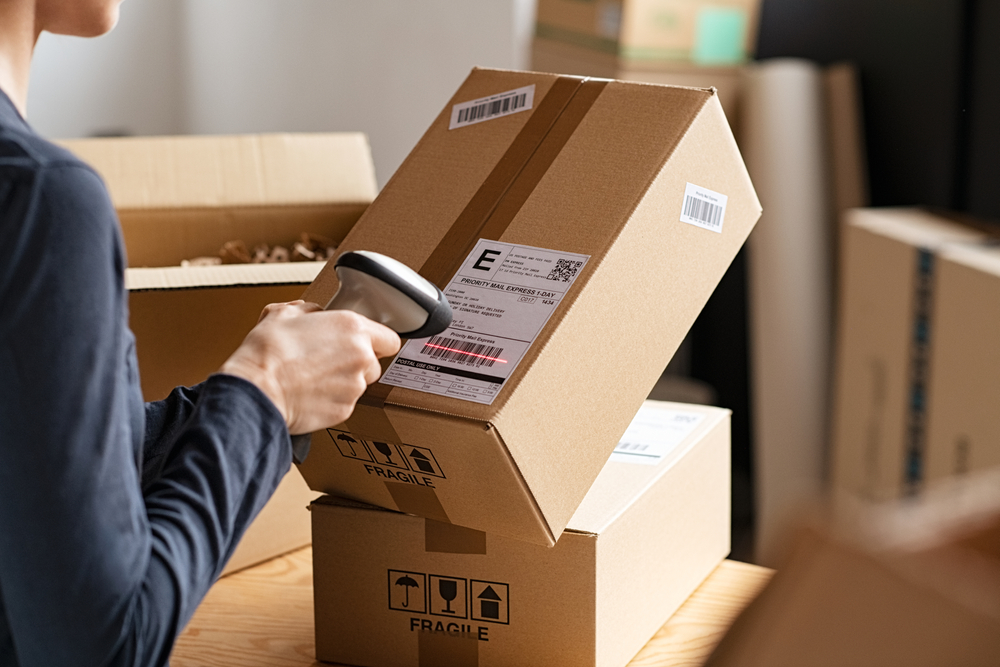
Errors are the next place. When labels come straight from order data, nobody retypes an address, which means fewer reships, reprints, and support emails.
Then there's rate selection. Rate shopping compares live carrier rates before each label prints. Across a full batch, it catches savings a single default carrier would miss.
Multi-carrier platforms bring all of this into one place, with discounts of up to 90 percent off retail. Carrier networks reaching more than 220 countries mean even occasional international orders are covered.
Box selection rounds it out, since the right box on every order keeps dimensional weight charges in check.
Protecting Order Accuracy in a Batch
Speed only helps if the orders go out right, and batching raises the stakes. One wrong pick early in a run can ripple through several orders before anyone notices.
Most small teams don't have a second person checking every order, so the system has to do that work. Address verification and automatic label generation catch errors a tired packer would miss late in a shift.
Inventory accuracy belongs in the same conversation. A stockout discovered mid-batch stops the whole run while someone tracks down the missing unit.
Handling Volume Spikes
Launches and campaigns are exactly what batching was built for. A predictable spike can be absorbed without extra headcount, as long as the system is already in place. That timing is the catch. A team that sets up batching during a spike is learning a new process at the worst possible moment.
When the spike does arrive, batch label creation turns hundreds of labels into a few clicks. Forecasting helps you see it coming. Knowing which SKUs spike, and when, lets you plan batch sizes and staffing ahead of time. Sales channels often behave differently, so it's worth forecasting them separately.
Common Batch Shipping Mistakes
Most batching problems trace back to a handful of habits. The most common is grouping orders by date alone, so batches aren't similar enough to save time.
Close behind is skipping cut-off times. An open batch never finishes cleanly, because new orders keep interrupting it.
Another is leaving manual steps in place after adopting new software. A team that automates labels but still rate shops by hand is only getting half the benefit.
The last is fixing the label step while ignoring the pick floor. Batch shipping efficiency depends on the whole floor, and faster printing doesn't help if picking still takes all afternoon.
Building a Lean Fulfillment Team Workflow That Holds Up
Batch shipping for small teams doesn't require enterprise processes. It takes batches sized to real volume, a pick floor that removes searching, and software that handles repetitive decisions.
VESYL prints bin locations on pick tickets, assigns boxes automatically, and rate shops every order in a batch. That frees the team's limited hours for picking and packing, not clicking through screens.
Related Topics
Learn how VESYL can save you money on shipping
Not sure which plan suits you best? Have questions about our software? Contact our sales team for expert guidance.

%20(1).png)