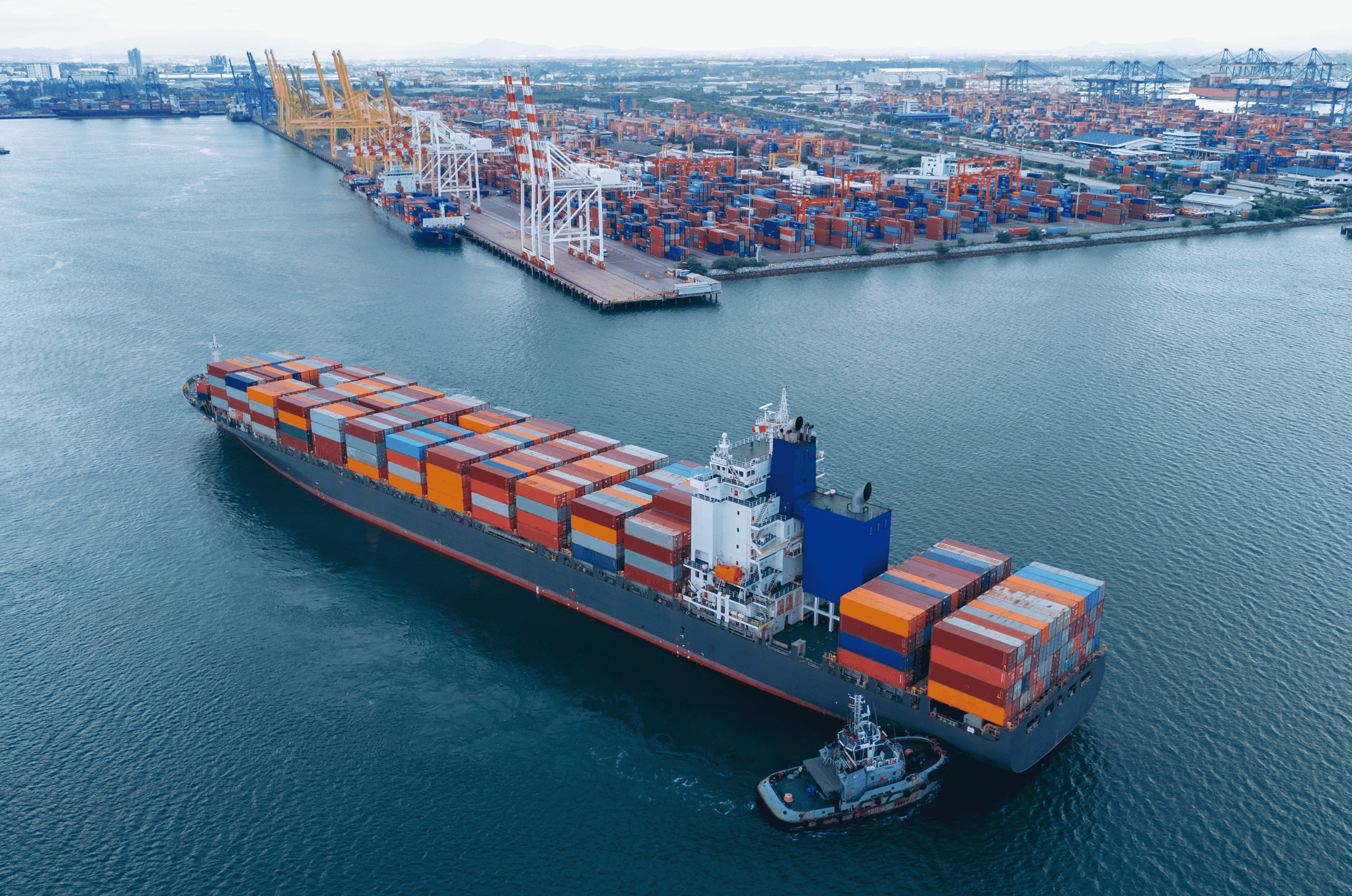

The cost and compliance environment for shippers is getting more complicated, and the margin for passive decision-making is narrowing.
This week, geopolitical instability and a surging AI investment cycle are colliding in global supply chains, while domestic shifts in trade enforcement, carrier financials, and freight capacity are adding pressure from multiple directions. The through-line: operators who aren't actively managing carrier mix, compliance posture, and cost exposure are going to feel it.
The Top 5 Shipping Stories This Week
1. Supply Chain Pressure Index Hits 1.8 Standard Deviations Above Average
The New York Fed's Global Supply Chain Pressure Index rose 1.3 points this week, reaching its highest level in recent months. The drivers are compounding: the near-closure of the Strait of Hormuz is squeezing petrochemical inputs, and the AI infrastructure build-out is creating additional demand on already-strained high-tech supply chains in Southeast Asia. Transpacific contract rates surged by up to $1,000 per 40-foot container overnight.
What It Means for Shippers
Freight rate volatility is back, and it's being driven by factors that aren't going to resolve quickly. Operators who locked in annual contracts at last year's rates may have a short window before renegotiations become necessary.
- Rate shopping across carriers is no longer optional, it's a weekly discipline
- Networking equipment and computer memory components face the highest near-term shortage risk; factor that into inbound planning
- Southeast Asian sourcing lanes are particularly exposed. Build buffer inventory on critical SKUs now
- Diversifying carrier mix across Transpacific lanes reduces exposure to single-rate volatility
Watch freight indexes closely over the next 30 days, asthis has room to move further.
2. North American Trade Compliance Gets More Scrutiny
A U.S. Supreme Court ruling invalidated certain IEEPA tariffs, and CBP has opened a portal for refund claims with a 60-90 day processing window. At the same time, the DOJ launched a Trade Fraud Task Force targeting transshipment schemes used to obscure goods' true origin. Canada's CARM system is now the official record for all imports, and Mexico added an Automatic Import Notice requirement for aluminum shipments.
What It Means for Shippers
Compliance pressure is increasing across all three North American markets simultaneously. Enforcement on origin tracing is no longer a customs formality, it's an active risk vector.
- File for IEEPA tariff refunds promptly; the 60-90 day window means cash recovery is possible but requires action now
- Audit any transshipment arrangements in your supply chain, the DOJ task force is specifically targeting these
- Canada cross-border shipments now require tighter data accuracy under CARM; errors that previously passed are flagging
- Mexican aluminum imports need origin documentation that goes back to the smelting level
The regulatory environment is tightening across the board and operators without clean origin documentation are exposed.
3. USPS Reports $2 Billion Quarterly Loss
USPS posted a $2 billion net loss this quarter and has warned it could run out of cash to pay employees and vendors by early 2027. This follows an already difficult period that included the proposed fuel surcharge announced last month. The financial picture at USPS is deteriorating faster than most carriers anticipated.
What It Means for Shippers
Businesses that rely heavily on USPS for domestic parcel volume are carrying a concentration risk that is growing. Financial instability of this magnitude typically precedes service cuts or accelerated rate action.
- Evaluate what percentage of your parcel volume runs through USPS and model cost scenarios if rates increase 10-20%
- Service disruptions, particularly for final-mile in rural zones, become more likely as financial pressure mounts
- USPS remains competitive on certain weight and zone combinations, but that calculus may shift quickly
- Now is the right time to negotiate volume agreements with alternative carriers before demand spikes
The trajectory here is not improving. Plan as if service and pricing changes are coming, not possible.
4. US Truckload Capacity Is Tightening
Seasonal demand combined with new regulatory events is contracting available truckload capacity across key domestic lanes. Freight rates are rising and lead times for capacity booking are extending. The market has shifted from the loose capacity conditions that defined most of 2024 and early 2025.
What It Means for Shippers
This is the kind of shift that catches operations teams off guard if they're still planning with last year's assumptions. Domestic ground transportation costs are moving up, and flexibility is shrinking.
- Book capacity earlier than your current lead time, the market is not forgiving last-minute requests the way it was six months ago
- Evaluate whether any high-volume lanes justify dedicated contract capacity rather than spot booking
- Review fulfillment center proximity to key customer zones; longer hauls are getting disproportionately expensive
- If you're using multi-stop truckload to reduce cost, check whether that efficiency still holds at current rates
Operators who secured carrier relationships and contract rates before this tightening are in a materially better position right now.
5. USPS Considers Allowing Handgun Shipments
For the first time in roughly a century, USPS is weighing a rule change that would permit individuals to ship handguns through the mail. Currently, handgun shipments via USPS are prohibited, while private carriers like FedEx and UPS restrict them to licensed firearms dealers.
What It Means for Shippers
The direct impact on most ecommerce operators is limited, but a policy shift of this scale tends to trigger compliance and handling reviews across the broader parcel network.
- Watch for updated carrier handling and security protocols that may affect general parcel processing
- New compliance requirements, whether through this rule or in response to it, could affect documentation and labeling standards
- If you operate in adjacent categories (sporting goods, outdoor equipment), understand how carrier-specific restrictions may evolve
- Any expansion of regulated item shipping typically leads to broader audits of carrier policies across all categories
This is a slow-moving story, but its downstream effects on carrier policy are worth tracking.
The Bottom Line
This week's news reflects a shipping environment under pressure from multiple directions at once, from geopolitical instability driving up freight costs, domestic carrier financials deteriorating, compliance requirements tightening, and ground capacity contracting. None of these are isolated events.
The operators who weather this well aren't reacting to each story in isolation. They're running carrier diversification as a standard practice, maintaining clean compliance documentation, and building cost models that account for rate volatility rather than assuming stability.
Smart operators are already reassessing their USPS dependency and locking in truckload capacity before the market tightens further.
Related Topics
Learn how VESYL can save you money on shipping
Not sure which plan suits you best? Have questions about our software? Contact our sales team for expert guidance.


.png)
%20(1).png)