.png)

Order volume goes up. The obvious answer is to hire more people to keep up. But hiring solves volume temporarily and adds a new problem on top: more training time, more management overhead, and more people doing the same manual, error-prone process the last hire was doing.
At some point, warehouse automation becomes a better lever than headcount, not instead of people, but alongside them.
This article covers what warehouse automation for ecommerce actually looks like in practice, and how growing brands use it to scale fulfillment without a proportional increase in staff every time order volume climbs.
Why Headcount Stops Being the Answer at a Certain Point
Adding people to a manual process scales labor costs directly with order volume. Double the orders, and you're generally looking at close to double the picking, packing, and inventory management hours needed, plus the ramp-up time it takes a new hire to reach full speed.
Manual processes also carry human error at a fairly constant rate regardless of headcount. More people doing the same manual data entry and repetitive tasks just means more chances for the same mistakes: mis-picks, inventory records that don't match physical stock, orders that ship late during peak seasons.
Warehouse automation combines software, robotics, and inventory management systems to streamline operations in a way that headcount alone can't. It removes the repetitive decision points rather than just adding more people to handle them.
What Warehouse Automation Actually Looks Like for Ecommerce
Warehouse automation doesn't have to mean a fully robotic distribution center. For most growing ecommerce businesses, it starts with a few specific, practical pieces.
Automated Pick Paths and Bin Location Accuracy
Efficient picking depends on knowing exactly where an item is and routing a picker there without wasted movement. A modern warehouse management system tracks bin locations and generates optimized pick paths, which reduces the time spent walking a warehouse floor searching for stock.
Automation can improve order accuracy to as high as 99 percent, largely by removing the guesswork that leads to picking errors in the first place.
Batch Processing and Packing Workflows
Batch processing groups similar orders together for picking and packing, rather than handling each order individually from start to finish. Conveyor technology, where it's used, further reduces manual handling by moving items through the packing process automatically rather than requiring a person to carry each item between stations.
Real-Time Inventory Tracking
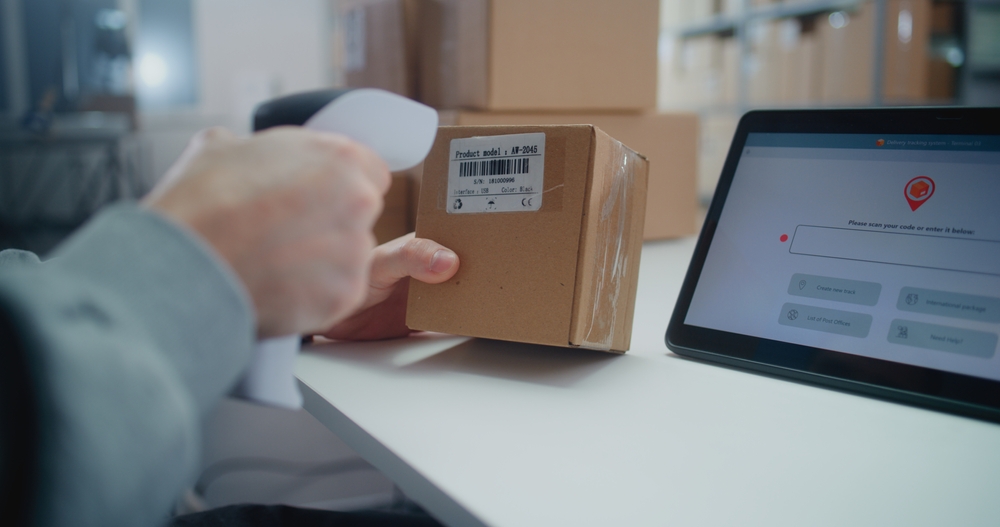
Modern inventory management systems track products in real time, which prevents two of the most common warehouse headaches: overstocking and stockouts. Integrating barcoding systems reduces manual data entry errors, since stock counts update automatically as items move rather than depending on someone remembering to log a change by hand.
Where Automation Changes What Your Team Spends Time On
The goal of warehouse automation isn't fewer people, it's fewer people spending time on routine tasks that don't need human judgment. Enhanced productivity allows employees to focus on higher-value tasks instead of manual, repetitive work: handling exceptions, managing vendor relationships, or solving the kind of problem a system genuinely can't.
Automated workflows help maintain throughput during seasonal demand spikes without proportional staffing increases. That matters most during peak periods, when hiring temporary staff is expensive, slow to ramp up, and often gone again before the next spike.
Automated systems can operate continuously, increasing throughput without requiring more staff hours to match. That's a different kind of scaling entirely from adding bodies to the floor.
Signs Your Warehouse Is Ready for More Automation
A few operational signals tend to show up before a warehouse is ready to talk about automation seriously.
New hires taking longer than expected to reach full productivity is one, since it often means the process itself is more complicated than it needs to be, not that training is the problem. A rising error rate as order volume grows is another, particularly if returns tied to mis-shipped or mis-picked orders are increasing along with sales.
Storage space getting harder to manage efficiently is a third signal. Automated storage and retrieval systems can reduce space requirements by up to 90 percent in some cases, which matters a great deal if a growing ecommerce business is running out of warehouse space faster than it's running out of budget for a bigger facility.
Starting Small: Automation That Doesn't Require a Full Overhaul
Warehouse automation doesn't require every piece at once. A warehouse management system on its own automates a meaningful share of daily warehouse functions, inventory tracking, pick path optimization, order routing, without requiring conveyor belts or automated guided vehicles on day one.
Growing ecommerce businesses often start with software-based automation and add physical automation, like conveyor systems, later, once volume genuinely justifies the capital investment.
For businesses not ready to build out a full warehouse operation internally, third party logistics providers can handle storage, picking, and shipping using their own automated systems. That's a way to access warehouse automation's benefits without owning the equipment directly.
Whichever path fits, the point is the same: automation is something you scale into deliberately, not something that requires an all-or-nothing decision.
Returns Processing and Inventory Accuracy
Returns management is often the part of warehouse operations that gets automated last, even though it's a consistent source of delay and inventory inaccuracy.
A warehouse management system improves returns processing efficiency by updating inventory records the moment a returned item is inspected and restocked, rather than leaving that item invisible in the system until someone manually processes it. Effective returns processing minimizes delayed shipments elsewhere in the warehouse too, since staff aren't pulled off outbound fulfillment to manually sort a backlog of returns.
Real-time inventory monitoring, extended to returns, prevents the kind of stockout that happens when an item is technically back in the warehouse but not yet reflected as available stock. This is one of the more overlooked ways automation protects revenue, not by speeding up outbound shipping, but by making sure returned inventory becomes sellable again as fast as possible.
Warehouse automation, built up piece by piece rather than all at once, tends to be what lets a growing ecommerce business absorb rising order volume without hiring at the same pace. The brands that get this right aren't the ones with the most robots on the floor, they're the ones that removed the repetitive, error-prone decisions from their team's day so the people they do have can spend their time on the work that actually needs a person.
Related Topics
Learn how VESYL can save you money on shipping
Not sure which plan suits you best? Have questions about our software? Contact our sales team for expert guidance.
.png)