
The cost of moving goods is rising from every direction at once, and the causes are not temporary.
Truckload spot rates are at two-year highs, USPS is about to reprice a service that millions of small parcels move through every day, and U.S. port infrastructure is facing a deficit that won't close until 2029 at the earliest. Set against a backdrop of Red Sea instability and new data on what separates fast-growing ecommerce brands from everyone else, this week's news is less about isolated events and more about a market that is structurally repricing. Here is what operators need to know.
The Top 5 Shipping Stories This Week
1. Truckload Spot Rates Jump 23% as Capacity Tightens
Truckload spot rates surged 23% off their 2025 lows during the week of May 18–22, while contract rates rose a comparatively modest 5%. The convergence of Memorial Day, a shortened workweek, month-end shipping pressure, and produce season tightening regional capacity all hit simultaneously, and the market had no slack to absorb it.
What It Means for Shippers
This is not a one-week anomaly. Analysts tracking DOT Week pricing patterns are flagging the same tightness running through the July 4 period, meaning the window to lock in coverage at current contract rates may be closing.
- Tender compliance is under pressure. Secondary carrier coverage should be reviewed now, not after a missed pickup
- Contract pricing at +5% masks the real exposure; brands relying on spot to fill gaps will pay significantly more
- Regional capacity is particularly tight in produce corridors, meaning freight moving through California, Florida, and the Pacific Northwest is most exposed
- Budgets built on 2025 benchmarks are already stale. Model at least a 10–15% upward revision for spot-heavy shipping lanes
Operators who locked in contract coverage early have a meaningful cost advantage heading into summer. Those who did not should move quickly.
2. USPS Ground Advantage Rates Rising Nearly 22% in July
USPS has announced that Ground Advantage rates will increase by nearly 22% effective July 12, 2026. The increase is paired with a network expansion, 14 new regional distribution facilities intended to improve sorting speed and upstream injection options, but the rate change will hit billing long before any service improvements are realized.
What It Means for Shippers
For ecommerce brands that leaned into Ground Advantage as a cost-efficient alternative to UPS and FedEx, this closes a meaningful pricing gap. The math changes significantly for lightweight parcels under two pounds, where USPS has historically outperformed private carriers.
- Brands shipping 1–2 lb packages at volume should model the July impact now and identify the breakeven point against regional carrier and gig-based alternatives
- The network expansion is a genuine longer-term positive, but it will not offset the rate increase in Q3 or Q4 2026
- If you are using a rate shopping tool, verify that updated USPS tariffs are reflected by early July, pricing surprises at carrier selection are operationally costly
- DIM weight application and zone distribution matter more at higher base rates, an audit of your current parcel profile is worth running before the effective date
Review your carrier mix before July 12. There may be a window to renegotiate regional carrier agreements with this shift as leverage.
3. U.S. Ports Face a $6.7 Billion Equipment Deficit Through 2029
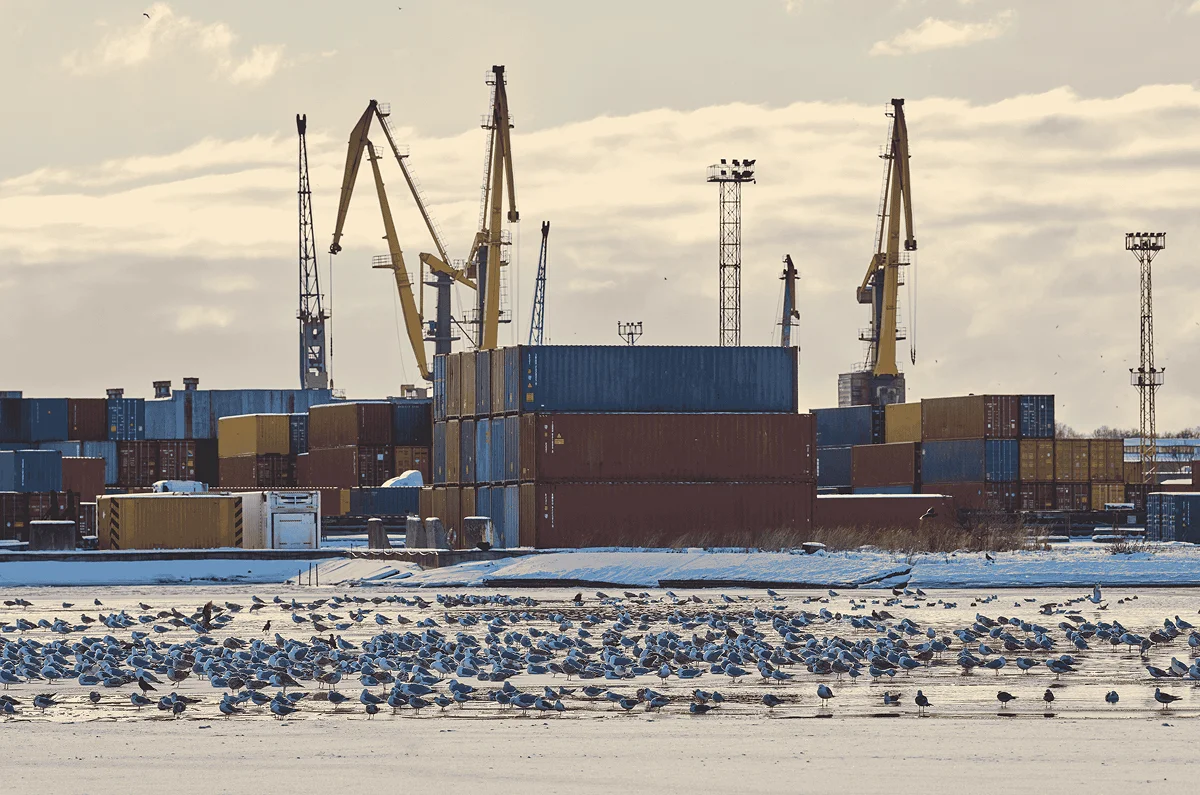
A survey of senior terminal executives has quantified what many supply chain teams have felt operationally: U.S. ports need approximately $6.7 billion in equipment investment — ship-to-shore cranes, terminal upgrades, and handling infrastructure — over the next five years. New cranes carry an 18–24 month lead time, which means the constraint is structural through at least 2029.
What It Means for Shippers
This is not a congestion story, it is an infrastructure story, and that distinction matters for planning. Congestion resolves when volume normalizes. An equipment deficit persists regardless of volume, and it will be most visible during peak seasons when throughput demands are highest.
- Detention and dwell time exposure should be factored into freight cost modeling for any business moving containerized imports
- Port diversification is worth revisiting. Gateway selection based purely on carrier relationships may be leaving service reliability on the table
- Drayage SLAs negotiated before this reality was quantified are likely underprotecting you. Clauses that account for port-side delays deserve a hard look
- The East Coast and Gulf ports with stronger recent capital investment are worth prioritizing where your lane structure allows
Smart operators are already adjusting gateway selection. The ones who are not will be negotiating drayage exceptions under pressure during peak.
4. Sea and Air Freight Shifts from Emergency Option to Standing Strategy
With Red Sea and Suez Canal disruptions showing no signs of resolution, logistics teams that initially turned to sea-and-air freight as a workaround are formalizing it as a standing component of their international shipping strategy. The hybrid model, ocean leg to a mid-route hub, then air freight to destination, trades some cost efficiency for route flexibility and transit predictability.
What It Means for Shippers
This is a meaningful signal. When workarounds get written into standard operating procedures, it reflects a judgment that the underlying risk is not going away. For brands with time-sensitive imports or high-value SKUs, the calculus on premium freight options has changed.
- Sea-and-air cost structures sit well above all-ocean but well below emergency air. Model them as a middle tier, not a last resort
- Transit time predictability often matters more than cost when stockouts carry a revenue cost. Factor that into the comparison
- Carrier relationships that enable quick pivots between modes are now an operational asset, not just a procurement checkbox
- Any brand sourcing from Asia with a peak season dependency should have a formalized multimodal contingency in their Q3 freight plan
The supply chains that perform well through 2026 will be the ones that built flexibility in before they needed it.
5. Outsourced Fulfillment Correlates with 6x Faster Revenue Growth
The 2026 eComFuel Trends Report found that ecommerce brands outsourcing their fulfillment operations are growing revenue nearly six times faster than those running their own warehouses. Roughly 57% of ecommerce companies now outsource some or all of fulfillment. The report also flagged a broader shift away from Amazon as a primary revenue channel, with DTC-first operators showing higher gross margins and faster growth.
What It Means for Shippers
The data separates two things that often get conflated: control and competency. Brands that assumed in-house fulfillment gave them a competitive advantage are finding that the operational overhead of running a warehouse often costs more than it saves — in capital, in headcount, and in management attention.
- 3PL relationships are not one-size-fits-all. The brands seeing the fastest growth are choosing partners built for their volume tier and SKU complexity, not the largest available network
- DTC-primary growth and higher margins are connected. Brands reducing Amazon dependency are investing the margin difference into customer experience and retention
- Cost per order reductions through outsourcing are only part of the story; the freed capacity for product, marketing, and retention investment is where the compounding happens
- If you are managing fulfillment in-house and scaling is slowing you down, the data is now unambiguous on what the faster path looks like
Brands still treating warehousing as a core competency should ask whether that assumption is backed by their numbers, or just their history.
The Bottom Line
The theme this week is structural change masquerading as short-term volatility. Truckload tightness, USPS repricing, port equipment deficits, rerouted international freight, and a decisive shift toward outsourced fulfillment are not separate events, they are a market that is repricing risk and complexity at every node. Operators who are treating these as temporary fluctuations are going to find themselves on the wrong side of their cost models heading into Q3 and Q4.
The ones who are moving now by locking in contracts, auditing their carrier mix, diversifying gateways, and formalizing multimodal contingencies, are building margin advantages that will compound through the rest of the year.
Related Topics
Learn how VESYL can save you money on shipping
Not sure which plan suits you best? Have questions about our software? Contact our sales team for expert guidance.
%20(1).webp)
.webp)
%20(1).webp)
.webp)