
Two landmark deals reshaped the trade cost picture for North American operators, while a major logistics report confirmed what most ops teams already know: complexity isn't easing, it's just changing shape. Understanding which of this week's developments actually affect your cost structure and which are noise is the job. Here's the breakdown.
The Top 5 Shipping Stories This Week
1. U.S. Issues Sweeping Iran Oil Waiver
The U.S. Treasury issued General License X today, authorizing the production, sale, and shipment of Iranian oil through August 21, 2026. The waiver followed Iran's commitment to maintain open transit through the Strait of Hormuz and allow IAEA inspectors back into the country. Coverage extends beyond crude exports to maritime services including insurance, bunkering, and vessel management.
What It Means for Shippers
Thirty-six million barrels have already moved since June 15. That volume, combined with reduced war-risk premiums on Hormuz transit, points to meaningful downward pressure on fuel costs and carrier surcharges in the near term.
- Fuel surcharge rates from major carriers are likely to soften over the next 4 to 8 weeks. Model this into your Q3 freight budget before locking anything in
- War-risk insurance premiums on Middle East lanes should begin retreating; get quotes now if you've been absorbing inflated rates
- The waiver expires August 21. Build a contingency assumption for late Q3 if it isn't renewed
- USPS, UPS, and FedEx surcharge schedules typically lag market fuel prices by 4 to 6 weeks; watch for adjustment announcements in July
This is a temporary window, not a structural shift. Treat it as a cost-timing opportunity, not a reason to revise your carrier strategy.
2. EU-U.S. Tariff Relief Deal Ratified
The European Parliament approved a comprehensive trade agreement with the United States that eliminates EU tariffs on American industrial goods and caps U.S. import duties on European products at 15%. The deal includes a mechanism allowing the EU to suspend concessions if U.S. steel and aluminum duties aren't lowered by end of 2026. It directly averts the threatened 25% hike on European vehicles and machinery.
What It Means for Shippers
For operations teams sourcing or distributing across the Atlantic, this removes the unpredictability that forced workarounds like tariff-hopping, dual-sourcing, and speculative inventory buffers.
- Landed cost models for European-origin goods can now be built on a stable 15% cap rather than scenario-ranged estimates
- Dual-sourcing arrangements built purely to hedge duty exposure are worth revisiting, consolidation may now be more cost-efficient
- The defensive toolbox clause means this deal isn't unconditional; monitor steel and aluminum developments through Q4
- Brands with EU manufacturing partnerships have a clearer path to volume commitments without tariff risk baked in
The predictability this deal creates is as valuable as the rate reduction itself. Update your cost models before your competitors do.
3. 2026 State of Logistics Report: Volatility Is the New Normal
The annual State of Logistics Report, released this week, declared that "continuous adaptation" has replaced "just-in-case" as the operating model for serious supply chains. While logistics costs as a percentage of GDP have stabilized, the report found that the complexity of managing those costs is at an all-time high, driven by fragmented technology stacks and persistent labor shortages.
What It Means for Shippers
Lower rates alone no longer determine who wins on fulfillment cost. The report makes clear that the competitive gap is now between operators who can see their data and act on it in real time versus those running on instinct and lagged reporting.
- Fragmented tech stacks are being cited as a primary cost driver. Every disconnected system is a blind spot with a price tag
- Labor shortage pressures aren't resolving; workflows that depend on headcount to absorb volume spikes are structurally exposed
- Real-time carrier and routing data is no longer a premium capability, it's the baseline for staying cost-competitive
- Operations teams still running on weekly or monthly reporting cycles are absorbing avoidable costs every day they don't have visibility
If your fulfillment stack isn't giving you actionable data in real time, that gap is costing you money the report can now quantify.
4. Port of Los Angeles Cargo Volume Surges 17%
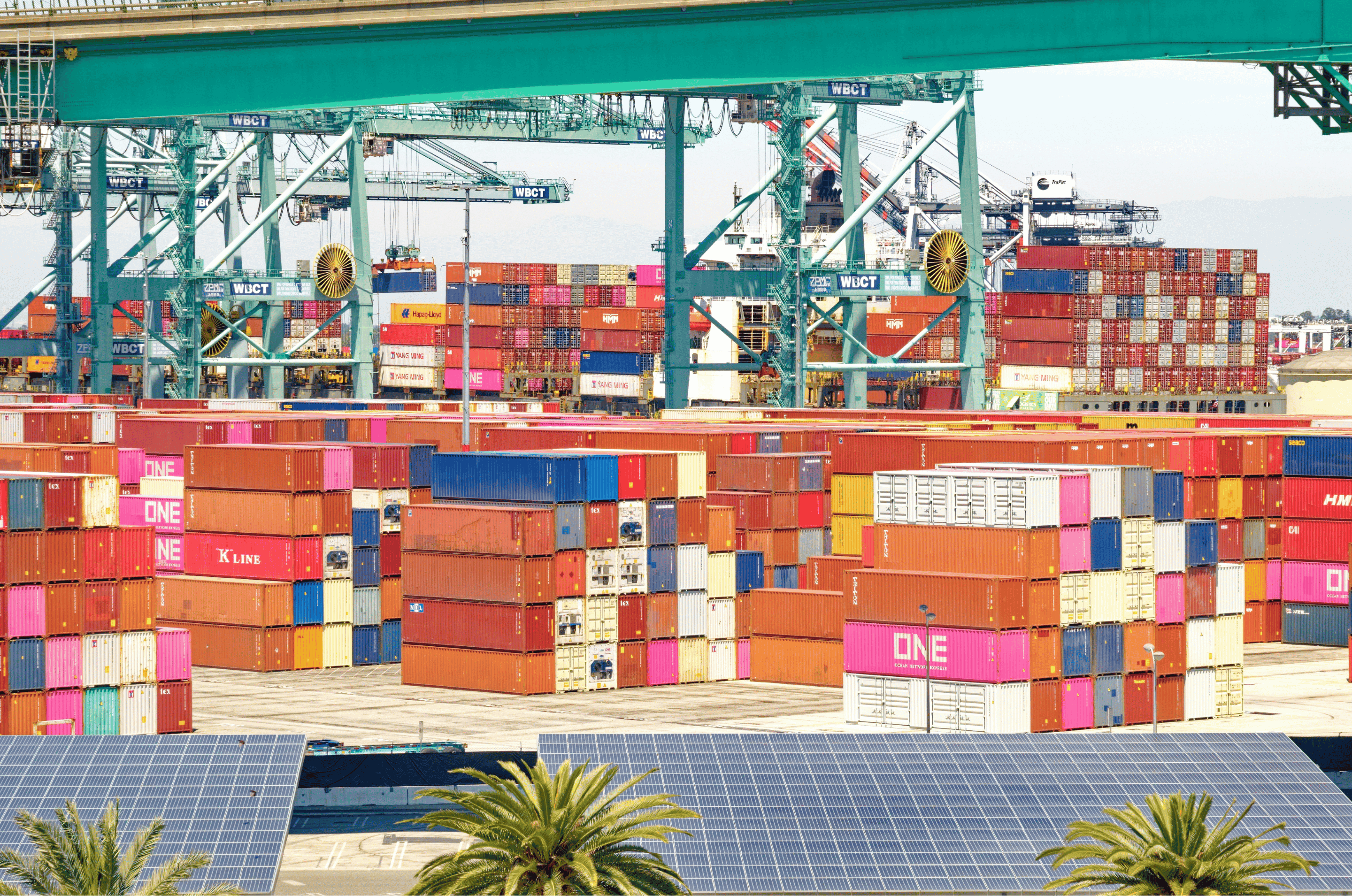
The Port of Los Angeles processed 840,165 TEUs in May, a 17% year-over-year increase, with loaded imports up 26%. Despite the volume surge, the port reported zero vessel backlogs, pointing to strong coordination across rail and trucking partners. The surge is attributed to a combination of inventory replenishment and cargo owners front-loading shipments ahead of anticipated fuel cost increases.
What It Means for Shippers
Zero congestion at current volumes is good news for inbound reliability. The 26% import jump is not.
- West Coast gateways are currently the most operationally efficient path for peak-season inbound. Build your import calendar around LA capacity while it holds
- The front-loading behavior means inland warehouse capacity will tighten significantly this summer as this volume hits distribution centers
- If you haven't confirmed Q3 warehouse throughput capacity with your 3PL, that conversation is overdue
- The import surge also signals that your competitors are building inventory. Demand signals and lead times will shift faster than usual heading into peak
The port is running clean now. Plan for the congestion that follows when 840,000 TEUs worth of goods start moving inland.
5. Nestlé Opens $330M Automation-First Distribution Hub
Nestlé USA opened a 700,000-square-foot distribution center in Arvin, California, featuring the largest Automated Storage and Retrieval System in the company's global network, alongside laser-guided vehicles and layer-picking robotics. The facility runs on 100% renewable electricity and is part of a $25 billion infrastructure upgrade designed to address labor bottlenecks at scale.
What It Means for Shippers
This isn't a headline about Nestlé. It's a benchmark for what enterprise-grade fulfillment infrastructure now looks like, and how far the gap has widened between operators who retrofitted and those who designed for automation from the start.
- ASRS-led facilities are reducing pick errors and labor dependency simultaneously. If your warehouse is still headcount-heavy at peak, this is the competitive gap widening
- The $25 billion parent investment signals that major CPG brands are treating distribution infrastructure as a strategic asset, not an overhead line
- Mid-market operators don't need to match this scale, but they need the same principle: design workflows for automation, not around current staff levels
- 3PLs absorbing this kind of technology investment will be raising their floor on service expectations, and minimum volume requirements
The companies building automation-by-design right now are setting the baseline that everyone else will be measured against in two years.
The Bottom Line
This week delivered two genuine cost tailwinds, fuel relief from the Iran waiver and tariff stability from the EU-U.S. deal, against a backdrop that makes one thing clear: the structural pressures on fulfillment operations aren't going away. The State of Logistics Report and Nestlé's infrastructure investment point in the same direction. Technology, visibility, and workflow design are now the primary cost levers, not carrier negotiation alone. The Port of LA surge is a short-term opportunity with a longer-term warning attached. Smart operators will bank the fuel and tariff savings now, use the Q3 runway to fix the visibility gaps the logistics report identified, and start the automation conversation before peak makes it urgent.
Related Topics
Learn how VESYL can save you money on shipping
Not sure which plan suits you best? Have questions about our software? Contact our sales team for expert guidance.
.png)

%20(1).png)
.png)