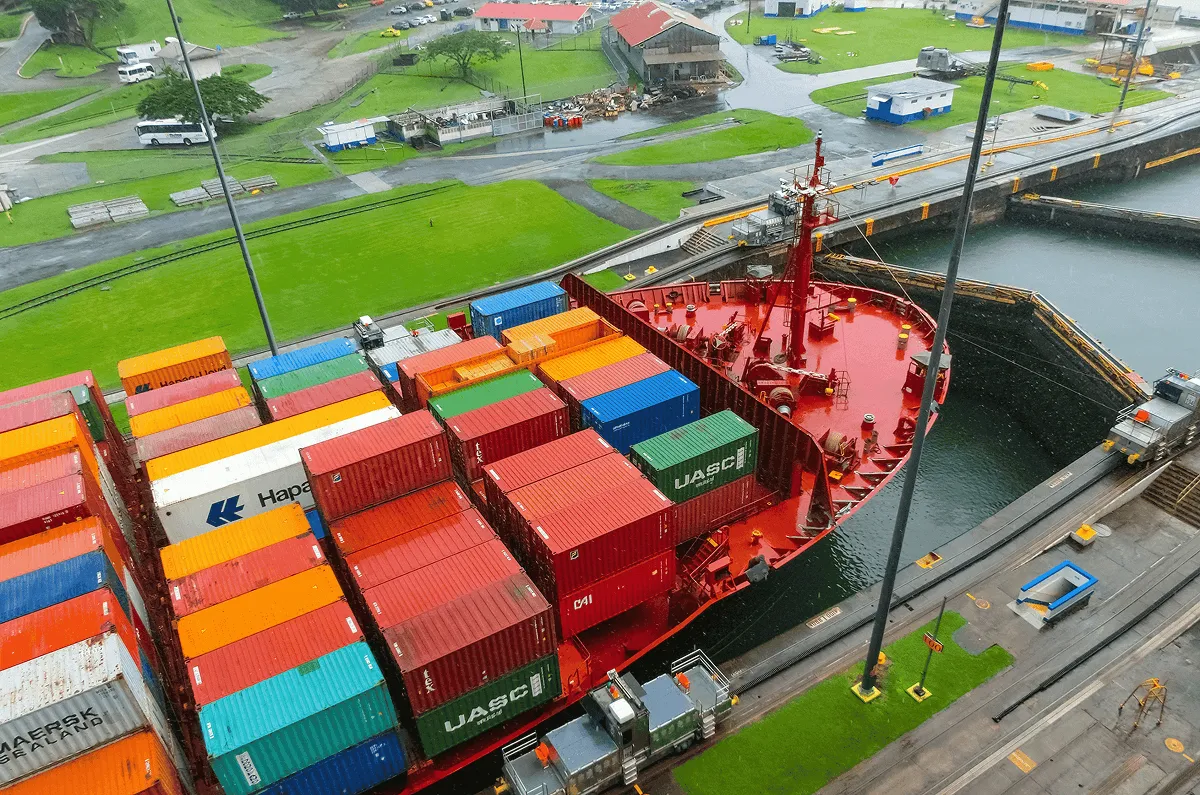

A tariff cliff got paused rather than resolved, a rail strike ended in time for peak-season routing to matter, and the Panama Canal's water problem became a published schedule instead of a forecast. Everything here has a deadline. The operators who treat these as decisions will spend September executing.
The Top 5 Shipping Stories This Week
1. US-Canada Tariff Standoff Breaks Into a Tentative Deal
A 50 percent tariff on roughly 20 billion dollars of Canadian goods was set to take effect August 20. On August 18, President Trump paused it for three days and said the two countries had a deal. Ottawa confirmed only that substantial progress had been made and important work remained.
What It Means for Shippers
This is a pause, not a signed agreement. The proposed cut to auto tariffs, from 25 percent to 15 percent, is still under discussion, and Canada has not confirmed the alcohol or dairy commitments either.
- Flag every SKU with Canadian-origin components or packaging before you finalize Q4 cost projections
- Hold your landed cost assumptions until a signed agreement replaces the pause
- Track the dairy and alcohol terms separately from autos
- Build the contingency scenario now, so a rate change doesn't become a same-week pricing decision
The number on the table today is not the one that matters. The number in a signed agreement is.
2. Panama Canal Transit Cuts Just Got a Firm Schedule
The Panama Canal Authority confirmed daily transit slots drop to 34 on September 3 and 32 on September 15, with rainfall well below the historical average for the watershed. It also revised its draft restrictions: the 48-foot limit moved from August 26 to September 2, and the 47.5-foot limit from September 3 to October 1. Trade press reported an auction slot payment as high as 4 million dollars for a single priority transit, a figure the Authority has not confirmed.
What It Means for Shippers
The capacity cuts are firm and dated. The draft restrictions actually loosened on the calendar even though the water shortage did not. Plan against the Authority's updated dates, not the ones in earlier coverage.
- Build your alternate routing plan around September 3 and September 15, not the original draft dates
- Reserve drayage and transload capacity ahead of September 3, now the nearer-term constraint
- Ask your carrier or forwarder directly whether your bookings sit in the auction slot market
- Treat this as a routing decision to close this week
The canal is not getting better before peak season. Plan against the schedule the Authority published, not the one from last week.
3. CPKC Rail Strike Ends, Workers Back on the Network Today
CPKC and the union representing its signals and communications employees agreed to binding arbitration on August 21, ending a strike that had run since late May. Workers returned to the network this morning. CPKC operates roughly 20,000 route miles across Canada, the US, and Mexico.
What It Means for Shippers
The stoppage is over, but arbitration is not a settled contract. The underlying wage and scheduling issues are still open.
- Confirm service normalization on your CPKC lanes over the next week or two rather than assuming immediate full recovery
- Treat this as reduced near-term risk, not a closed labor situation
- Read it against the Panama story: rail got more reliable right as more operators may need it
- Watch the arbitration outcome for cost or service effects later this year
One fewer thing can go wrong on your network this week. Confirm it rather than assume it.
4. Port of LA Posts Its Second-Busiest July, and Imports May Be Front-Loaded
The Port of Los Angeles moved 960,464 TEUs in July, its second-busiest July on record and 7.5 percent above the five-year average, though 6 percent below July 2025. Executive Director Gene Seroka expects another strong August and told reporters that cargo which normally arrives later in the season has already moved.
What It Means for Shippers
The year-over-year dip sits next to genuinely strong volume, so the number alone tells you little. Seroka's comment tells you more: imports were pulled forward, which makes the usual September and October peak a weaker planning assumption this year.
- Pull your own booking and arrival data before assuming a normal peak timeline applies
- Rebuild Q4 receipt forecasts off actual bookings, not last year's calendar
- If your inbound already landed, use that position to negotiate rather than waiting on a peak that may be behind you
- Watch August's actual TEU print against Seroka's guidance as the next real data point
Peak season may not follow the calendar this year. Your own booking data will tell you where it actually is.
5. Amazon Plans a Sixfold Drone Delivery Expansion
Amazon confirmed plans to expand Prime Air from 11 locations across 10 metro areas to nearly 500 US cities and towns by the end of 2026. Packages up to 5 pounds qualify, with most orders arriving around 60 minutes after checkout, and Amazon says more than 60 percent of its most frequently purchased items are eligible. The company reports it has delivered hundreds of thousands of packages by drone this year.
What It Means for Shippers
For most mid-market brands this is not a fulfillment threat. It is an expectation risk. Visible 30 to 60 minute delivery on a platform that size shifts what fast means to the shoppers you are competing for.
- Check whether your top ZIP codes by order volume fall inside the planned coverage
- Audit whether your stated delivery windows still read as competitive in those specific markets
- Watch last-mile pricing and capital shifts in markets where drone coverage scales
- Use this as a data point in delivery-speed messaging, not a mandate to match it
You don't need a drone fleet. You do need to know what expectations are being set where you compete.
The Bottom Line
Nothing this week is a slow-moving trend. A tariff paused but not resolved, a canal schedule revised twice in one week, a strike that ended without a settled contract, and a peak season that may already be running ahead of the calendar. All four have dates attached, which makes them decisions rather than reading. Operators who lock in routing, confirm cost exposure, and pull their own data will walk into September with a plan instead of a reaction.
Related Topics
Learn how VESYL can save you money on shipping
Not sure which plan suits you best? Have questions about our software? Contact our sales team for expert guidance.
%20(1).webp)
.webp)
%20(1).webp)
.webp)